


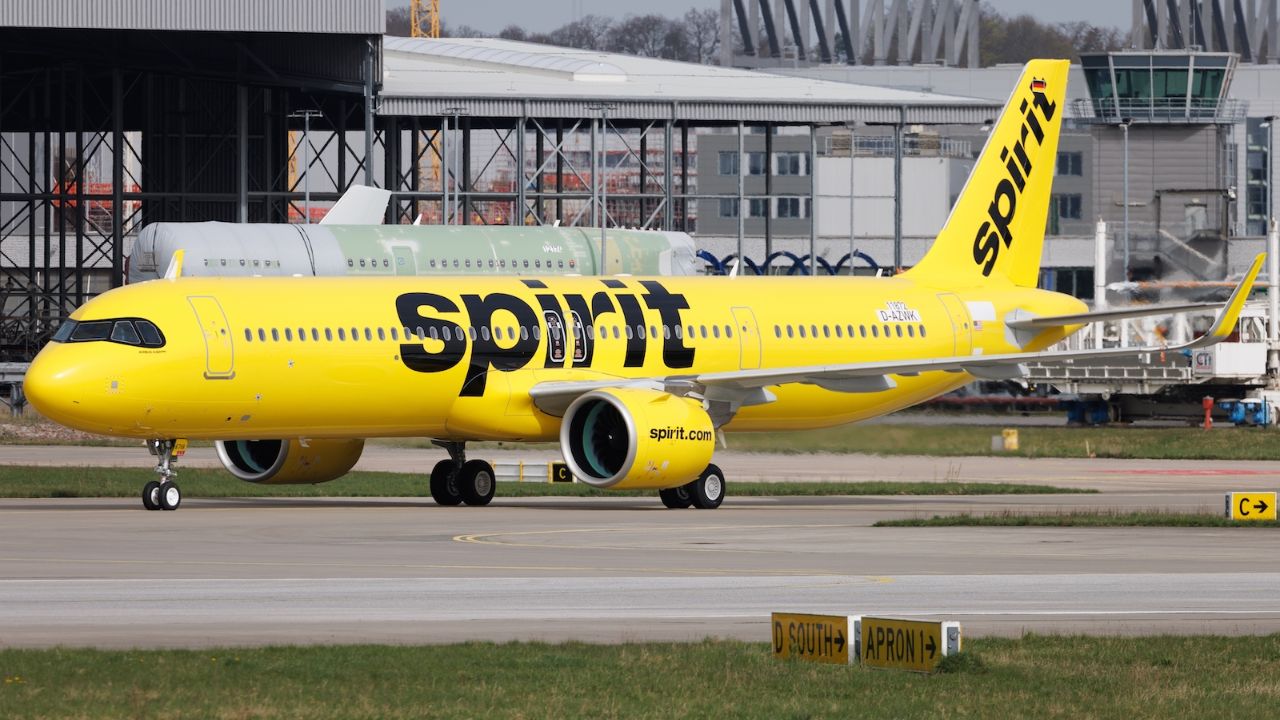
Spirit Airlines has ceased all operations on May 2, 2026, after failing to secure a bailout. The closure strands passengers, eliminates thousands of jobs, and is expected to push U.S. airfares higher. Full details here.
Spirit Airlines, the discount carrier that transformed budget flying in the United States, announced today it is shutting down all operations immediately after failing to secure a last-minute rescue deal.
The move marks the first major U.S. airline bankruptcy liquidation in 25 years and comes amid soaring jet fuel prices triggered by the conflict in Iran. The closure leaves thousands of passengers scrambling for new travel plans and puts approximately 17,000 jobs at risk.
“Orderly Wind-Down” Begins
In a statement released Saturday, Spirit Airlines said it began an orderly wind-down of operations effective immediately.
“We are proud of the impact of our ultra-low-cost model on the industry over the last 34 years and had hoped to serve our guests for many years to come,” the company said. “It is with great disappointment that on May 2, 2026, Spirit Airlines started an orderly wind-down of our operations.”
The airline canceled all remaining flights, disabled its customer service lines, and advised passengers not to go to the airport. Spirit ranked as the nation’s eighth-largest carrier by seats offered in 2025.
Spirit Airlines Passengers Left to Find New Flights
Travelers holding Spirit tickets face significant disruption. The airline will automatically issue refunds to passengers who paid with credit or debit cards through its website. Those who booked through travel agents must contact their agents directly.
Customers who used vouchers, credit, or Free Spirit points may have limited recourse, as companies in bankruptcy typically stop honoring such credits. Spirit said any potential refunds for those payment methods will be handled through the bankruptcy court process.
Several major U.S. airlines have announced they will offer support, including capped fares on nonstop routes previously served by Spirit. However, last-minute replacement flights are expected to come at a steep premium.
Passengers already midway through trips must arrange new flights on their own. Travel insurance may help cover additional costs, but Spirit will not reimburse incidental expenses.
Financial Struggles and Failed Rescue
Spirit has faced severe financial challenges since the COVID-19 pandemic. The carrier filed for bankruptcy twice, most recently in August 2025. It had reached a creditor agreement in February 2026 that would have allowed it to emerge with reduced debt.
That plan unraveled after the outbreak of conflict in Iran disrupted roughly 20% of global oil supply, driving jet fuel prices sharply higher. Jet fuel represents the second-largest expense for airlines after labor.
Larger carriers have absorbed some of the pain by raising select fares and adjusting capacity. Ultra-low-cost carriers like Spirit, however, depend heavily on rock-bottom base fares and have less flexibility to increase prices.
Spirit held advanced discussions with the Trump administration for an 11th-hour rescue package. The proposal reportedly would have given the government majority control of the airline’s shares. A key group of creditors ultimately rejected the plan.
President Donald Trump acknowledged the difficulties on Friday, saying, “We’re looking at it — but if we can’t make a good deal, no institution’s been able to do it. I’d like to save the jobs, but we’ll have an announcement sometime today.”
The idea of a targeted bailout drew criticism from parts of the airline industry and some Republican lawmakers.
Broader Impact on Travel
Spirit pioneered the ultra-low-cost model in the U.S., offering cheap base fares while charging extra for carry-on bags and other services. That approach forced competitors to introduce their own basic economy options and helped keep overall fares lower for millions of travelers.
The airline had roughly 9,000 flights scheduled from May 2 through the end of the month, representing about 1.8 million seats. Its departure will remove roughly 2% of domestic U.S. capacity this summer, a shift analysts say will likely push fares higher across the industry.
The Association of Value Airlines had been seeking broader congressional support for a $2.5 billion assistance package for smaller carriers.
A Tough Industry Reality
Airlines operate in a notoriously difficult environment, with high fixed costs for aircraft and labor and extreme sensitivity to fuel prices and economic swings. Eight major U.S. carriers have filed for bankruptcy in the past 25 years, often leading to mergers and greater industry consolidation.
Today, four major airlines — American, Delta, United, and Southwest — control about 80% of domestic flights. Complete shutdowns remain rare. The last significant U.S. carrier to go out of business was Midway Airlines in the immediate aftermath of the September 11, 2001 attacks.
Spirit’s 14,000 employees and thousands of contractors learned of the closure in the early morning hours. Union leaders described delivering the news as one of the most difficult moments in their careers.
As passengers and workers absorb the impact, the end of Spirit Airlines closes a chapter in American aviation that made air travel more accessible for a generation of budget-conscious flyers.