


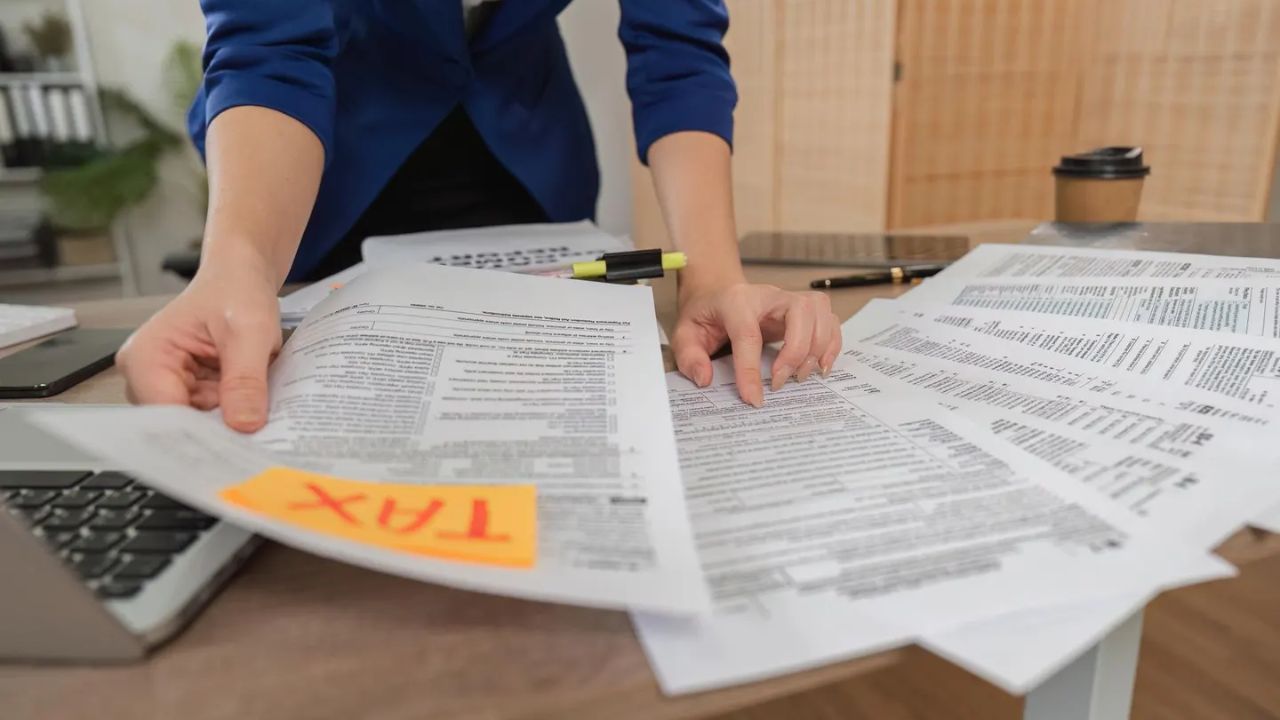
Paid Tax Preparers in most states need no license or training. A new bipartisan bill targets fraud and misconduct but stops short of requiring competency standards.
Every year, tens of millions of Americans hand over some of the most sensitive paperwork of their lives to a paid tax preparer, trusting that the person on the other side of the desk knows what they are doing. That trust, it turns out, may not always be warranted.
A close look at how the tax preparation industry works reveals a striking gap between public expectation and legal reality. In the vast majority of states, there is no minimum education requirement to become a paid tax preparer. No test. No license. No continuing education. In most places, virtually anyone can hang out a shingle and start charging for tax advice on the spot.
Now, a new bipartisan bill moving through Congress is attempting to address part of the problem. But consumer advocates and government watchdogs say it does not go nearly far enough.
Who is actually preparing your taxes
As of this filing season, the IRS has already received more than 41 million electronically filed returns, and roughly 43 percent of those were submitted by tax professionals. By April 15, that share will grow substantially. In fiscal year 2024, 57 percent of all individual filers used a paid preparer, totaling more than 85 million taxpayers.
There are approximately 870,000 individuals holding active Preparer Tax Identification Numbers, or PTINs, which the IRS requires anyone who prepares federal tax returns for pay to obtain and display on every return they file. But a PTIN is not a credential. It is a tracking number, nothing more. Having one says nothing about a preparer’s qualifications, experience, or honesty.
Of those 870,000 PTIN holders, only about 295,751, or roughly 40 percent, hold professional credentials such as a certified public accountant license, a law degree, or enrolled agent status. Enrolled agents must pass a rigorous three-part IRS examination and complete ongoing continuing education.
CPAs and attorneys are licensed at the state level under demanding testing and annual education requirements. All credentialed preparers are also subject to Treasury Department Circular 230, which governs professional conduct when representing taxpayers before the IRS.
The remaining 60 percent of PTIN holders, known as unenrolled preparers, face no such requirements. They generally cannot represent clients in IRS disputes unless they voluntarily complete the Annual Filing Season Program, a continuing education initiative that is entirely optional.
Ghost preparers: a hidden threat
Beyond the world of registered preparers lies an even murkier category: ghost preparers. These are individuals who prepare tax returns for pay without ever supplying a valid PTIN. The IRS has flagged them as a serious consumer hazard. Ghost preparers sometimes encourage taxpayers to claim credits and deductions they do not qualify for, and in some cases have been found to redirect refund deposits to their own bank accounts rather than the taxpayer’s.
Because ghost-preparer returns do not carry a valid PTIN, they are not captured in official counts. The true scale of the problem is unknown, but the IRS considers it significant enough to warn taxpayers explicitly about the risk each filing season.
The GAO’s findings: errors are the norm, not the exception
The Government Accountability Office has examined the quality of paid tax preparation multiple times, and its findings have not been flattering. In undercover visits conducted in 2006 and again in 2014, GAO investigators found that the majority of paid preparers they visited failed to calculate the correct refund amount. In the 2014 study, errors resulted in refund amounts ranging from $52 below the correct figure to $3,718 above it.
A broader review of IRS research data found that returns prepared by paid preparers carried an estimated 60 percent error rate, compared to 50 percent for taxpayers who prepared their own returns. The worst performers were unenrolled preparers, particularly on returns claiming refundable tax credits, where an inflated or incorrect claim can result in significant unauthorized payments from the federal treasury.
“Unenrolled preparers make mistakes more often than taxpayers who prepare their own returns or those who use credentialed professionals.”
The consequences of those errors are real and lasting. A preparer who understates a client’s tax liability may save that client money in the short term, but the taxpayer is ultimately responsible. When the IRS catches the error, often months or years later, the taxpayer faces back taxes, interest, and penalties. If a preparer overstates liability, the taxpayer loses credits and refunds they were legally entitled to receive.
Why the IRS cannot simply fix this on its own
The IRS tried to address this problem directly once before. In 2011, the agency launched a program that would have required all paid preparers to register, pass competency tests, and complete annual continuing education. It was called the Registered Tax Return Preparer program, and it seemed like a straightforward fix to a well-documented problem.
It did not survive the courts. In 2014, a federal appeals court ruled in Loving v. Commissioner that the IRS lacked the statutory authority to impose licensing requirements on tax preparers. The case had been brought by three independent preparers who challenged the program.
The courts rejected the IRS’s argument that an old statute authorizing it to regulate representatives practicing before the agency also granted it power over tax preparers. That statute, the courts noted, dated back to the 1880s and had been written to regulate individuals handling Civil War pension claims, not income tax returns.
The ruling left the IRS in a constrained position. It can still require PTIN registration and penalize specific acts of misconduct under existing tax law. But it cannot require testing, impose licensing standards, or deny someone the ability to prepare tax returns simply because they lack training. Only Congress can grant that authority.
A new bipartisan bill enters the debate
Congress is now considering exactly that kind of reform, though with a narrower focus than many advocates would like. The Taxpayer Assistance and Service Act, commonly called the TAS Act, was introduced by Senate Finance Committee Chairman Mike Crapo of Idaho and Ranking Member Ron Wyden of Oregon. The bill is bipartisan, broad in scope, and has drawn attention both for what it proposes and what it deliberately leaves out.
On the preparer accountability side, the bill would increase financial penalties for preparers who alter returns without client permission, fail to use valid identification numbers, prepare returns improperly, or steal refunds. More significantly, it would grant the Treasury Department explicit authority to deny, revoke, or suspend a preparer’s PTIN, a power the agency currently lacks in clear statutory form. That change would make it significantly easier to remove habitual bad actors from the system rather than simply fining them and leaving them in place.
“Currently, the IRS can penalize preparers after misconduct occurs, but removing a preparer from the system entirely can be difficult.”
What the bill does not do is equally significant. It stops short of requiring any minimum competency standard for paid preparers. No testing. No continuing education requirement. In that sense, the TAS Act is focused on removing bad actors after they cause harm, rather than setting a floor of basic qualifications before they begin.
Modernizing the IRS to reduce reliance on preparers
The TAS Act goes well beyond preparer oversight. A significant portion of the bill targets the IRS itself, with the goal of making the agency easier to deal with so that taxpayers feel less pressure to hire a professional in the first place.
Among the changes the bill would require: digitizing more paper returns and correspondence, expanding optical character recognition to reduce manual processing, upgrading the “Where’s My Refund?” tracking tool, and giving taxpayers real-time information on phone wait times along with callback options so they do not have to sit on hold indefinitely. The bill would also expand online accounts so taxpayers and their representatives can view notices and respond digitally.
The bill would also require annual reports on efforts to detect and prevent refund fraud, including data on fraudulent claims and disallowed refunds. Better fraud data could help identify patterns of preparer abuse before they become widespread. It also strengthens the independence and authority of the National Taxpayer Advocate and the IRS Independent Office of Appeals, two bodies that often serve as a taxpayer’s last line of recourse when things go wrong.
The policy tradeoffs Congress must weigh
The debate over whether to require minimum competency standards for tax preparers is not new, and the arguments on both sides are well established. Supporters of licensing requirements argue that the current system tolerates a level of error and consumer harm that would not be accepted in virtually any other professional services industry. Dentists, plumbers, and financial advisors all face licensing requirements. Tax preparers, who handle sensitive financial information for millions of Americans, largely do not.
Opponents of licensing requirements raise equally real concerns. Imposing testing and education mandates could force smaller, independent preparers out of the market, reducing access to affordable tax help in rural areas and lower-income communities that are already underserved. Those are the communities, critics note, that tend to rely most heavily on paid preparers and that have the fewest alternatives.
For now, Congress appears more comfortable tightening enforcement than setting universal standards. Whether that calculus eventually changes, and whether lawmakers will ever give the IRS the authority to require minimum qualifications across the entire industry, remains one of the more consequential unresolved questions in American tax policy. Tens of millions of taxpayers are waiting for an answer, whether they know it or not.