


Periodic Labs Raises $500 million: Periodic Labs, which plans to push breakthroughs in physics and chemistry using artificial intelligence, is in talks to raise $500 million at a valuation of $7.5 billion, a nearly sixfold jump since it was founded.
There is a moment in every breakthrough technology cycle when the funding stops looking like venture capital and starts looking like something else entirely — a verdict, a declaration, a bet so large it forces the rest of the world to take a side. Periodic Labs appears to have reached that moment. The San Francisco startup, barely a year old and operating with a staff of roughly 20 researchers, is in advanced talks to raise $500 million at a $7.5 billion valuation, according to reporting by Forbes.
The round is said to be led by AMP, an AI compute fund backed by Anjney Midha, a former Andreessen Horowitz partner. People familiar with the situation say demand from investors has already pushed the round into oversubscription territory. Periodic Labs and AMP declined to comment.
What makes this funding round worth more than a few lines of venture capital news is the question Periodic Labs is trying to answer. The company is not building another large language model, another AI-powered productivity tool, or another generative media platform.
It is building AI scientists — autonomous systems capable of designing physical experiments, instructing robotic laboratory equipment, collecting the resulting data, and iterating on what it learns without waiting for a human researcher to interpret the results. The ambition, stated plainly, is to automate scientific discovery itself.
Until now, scientific AI advances have come from models trained on the internet. At Periodic, we are building AI scientists and the autonomous laboratories for them to operate.”— Periodic Labs, company introductory statement
That is not a modest goal. It is also not a purely theoretical one. The two people who founded Periodic Labs are among the small group of researchers on earth who have already demonstrated, at real scale, that pieces of this vision can work.
Liam Fedus left OpenAI in early 2025, announcing his departure in a public message to colleagues that signaled he was looking to work with the lab as a partner going forward, rather than as an employee. The tweet set off what TechCrunch later described as a near-frenzy of venture capitalists reaching out. The first call Fedus took was from Peter Deng, a former OpenAI colleague who had recently joined the seed firm Felicis as an investor. They met for coffee in San Francisco’s Noe Valley neighborhood, wandered into a pitch walk over the neighborhood’s steep hills, and by the time the conversation ended, Deng described himself as stopped in his tracks.
OpenAI was initially thought to be a potential backer — Fedus had left with something resembling the company’s blessing and had even hinted at possible support from Sam Altman — but ultimately OpenAI did not appear on the investor list. The company did not need its former employer’s money. Fedus’s reputation was its own sufficient currency.
His co-founder, Ekin Dogus Cubuk — known to colleagues as Dogus — had been building toward this problem for years inside Google. In 2023, Cubuk was a lead researcher on the GNoME project, an AI tool that discovered more than two million new crystal structures, an achievement that garnered attention across both the scientific and technology press.
That same year, he was one of the researchers who documented the A-Lab platform, a fully automated robotic laboratory that synthesized 41 novel compounds in 17 days using recipes generated by language models. When Fedus and Cubuk sat down together and considered whether the moment had finally arrived to connect these dots into a company, they decided it had. A few weeks later, they had both resigned and were calling scientists.
Why This Matters Now: Periodic Labs Raises $500 Million
LLMs have run out of internet to learn from
Periodic Labs is built on a specific and consequential observation: large language models have largely exhausted the publicly available text on the internet as a source of new information. Every major AI lab is facing the same data wall. Periodic’s answer is to create a new source of data that has never existed before — a continuously growing record of physical experiments, including failed ones, generated by robotic labs running 24 hours a day. In this framing, the company is not just trying to discover new materials. It is trying to build a data flywheel that feeds the next generation of scientific AI.
What Periodic Labs Is Actually Building
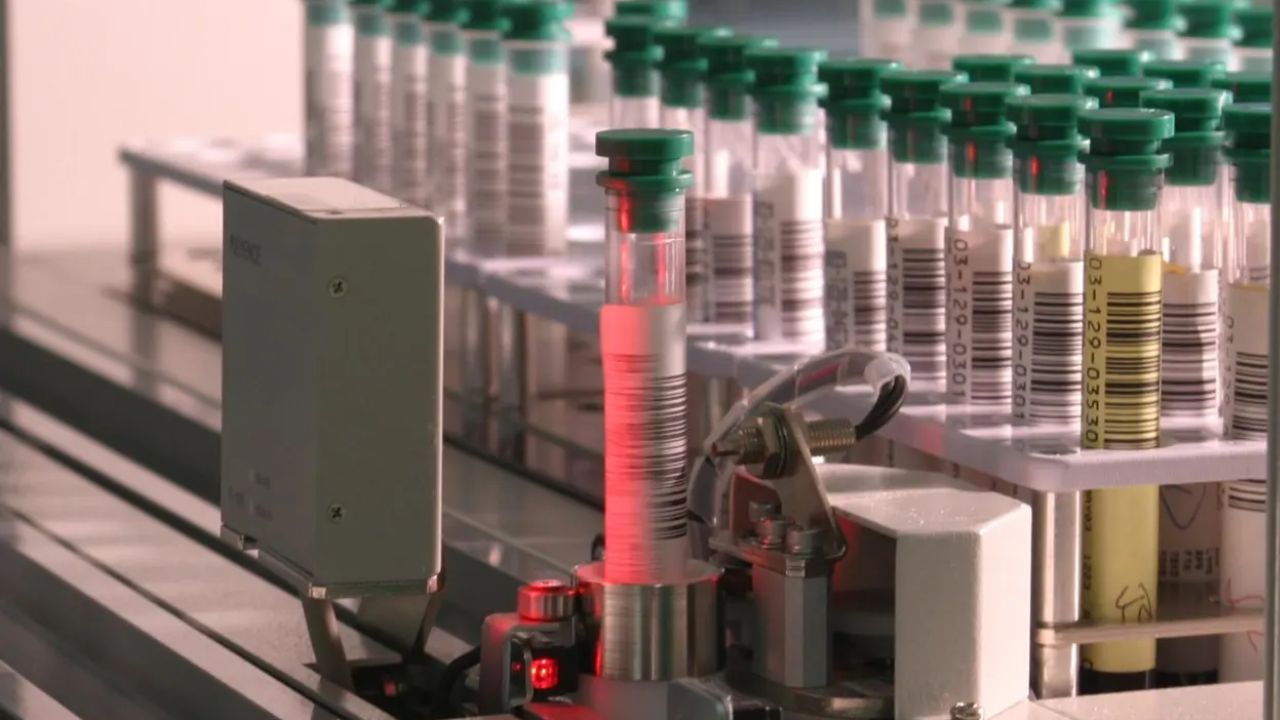
The company describes its core system as a “trinity” science stack. At the foundation is an autonomous robotic laboratory, capable of executing powder synthesis, substance mixing, and material preparation without human hands on any instrument. Above that sits an AI layer responsible for analyzing experimental results, identifying what the data reveals, and proposing the next hypothesis. Connecting the two is a feedback loop that runs continuously: the robot runs the experiment, the AI interprets the result, the AI proposes a refinement, and the robot runs the next version. The cycle repeats without a human researcher sitting in the middle of it.
The company’s first concrete scientific target is the discovery of new superconductors — materials that conduct electricity without resistance, with applications across energy storage, medical imaging equipment, computing hardware, and transportation infrastructure. Traditional research cycles in this field can take a decade or more. Periodic believes its approach could compress that timeline to a matter of years, because the AI does not need to sleep, does not need to wait for a publication to appear in a journal, and treats every failed experiment not as a setback to be discarded but as a data point to be consumed.
“Every deviation in an experiment and every error feedback is an opportunity for the model to understand the physical world,” Cubuk said in an earlier company statement. “AI is not afraid of failure. It is only afraid of having no data.”
That philosophy has a direct commercial implication. Failed experimental data is normally invisible — unpublished, discarded, lost. Periodic is building the infrastructure to capture all of it. Over time, that accumulated corpus of physical-world experimental outcomes could become a proprietary dataset with no equivalent anywhere in the world. Anjney Midha, who helped incubate the company and now leads AMP, the fund that is heading the new round, framed the thesis concisely in a public statement: “You can reread the textbook, but eventually you need to run the experiment.”
From a $300 Million Seed to a $7.5 Billion Valuation
The current fundraising effort, if completed at the terms being discussed, would represent a remarkable acceleration in the company’s valuation trajectory. Periodic Labs emerged from stealth in September 2025 with a $300 million seed round — one of the largest seed-stage financings in technology history — at a valuation of $1.3 billion. The round drew a roster of backers that few companies at any stage would be able to assemble.
| Investor | Round | Notable Connection |
|---|---|---|
| Andreessen Horowitz (a16z) | Seed Lead | Called it “an opportunity to compress decades of scientific research progress” |
| Felicis Ventures | Seed (First Check) | Peter Deng, former OpenAI colleague of Fedus, cut the first check |
| Nvidia | Seed | Strategic interest in AI compute demand and materials science |
| DST Global, Accel | Seed | Participated alongside a16z in the September 2025 round |
| Jeff Bezos, Eric Schmidt, Jeff Dean, Elad Gil | Seed (Angels) | High-profile individual investors who joined the founding round |
| AMP (Anjney Midha) | New Round Lead | Midha co-incubated Periodic and spends several days a week in its offices |
Bloomberg reported in March 2026 that Periodic was in early discussions with investors at a valuation of around $7 billion. The Forbes reporting on the current round puts the target valuation at $7.5 billion and describes the round as oversubscribed — meaning more investor capital has already been offered than the company intends to take. For a company that has not yet released a public product, that level of demand is unusual even by the stretched standards of the current AI funding market.
What Sets This Apart From Other AI Funding Rounds
There is a reasonable question worth sitting with: why does a 20-person company with no publicly available product command a valuation nearly six times what it carried eight months ago? The answer has at least three parts.
The first is the founding team itself. Fedus and Cubuk are not researchers who have written promising papers about things that might be possible. They are researchers who built systems that are already in use — ChatGPT in Fedus’s case, GNoME and the A-Lab robotic platform in Cubuk’s. The field they are entering, materials science, has a direct and measurable commercial bottleneck that their approach is specifically designed to address. Semiconductors, energy storage, aerospace, and advanced electronics are all industries where the discovery of new materials is the rate-limiting step on progress. Periodic already has paying customers in the semiconductor sector working on chip heat dissipation, according to people familiar with the company’s commercial activities.
The second part is the data argument. The competition for training data among AI labs has become one of the defining strategic pressures of the current period. Internet text is largely exhausted. Synthetic data helps at the margins. Physical experimental data — generated in real laboratories, capturing the full texture of how matter actually behaves under controlled conditions — is genuinely scarce, and genuinely hard to create. A company that builds the infrastructure to generate that data at scale is not just a materials science startup. It is potentially a data asset that the broader AI industry cannot easily replicate.
The third part is compute. AMP, the fund leading the current round, is not a conventional venture capital operation. It is structured as a pool of shared computing resources, modeled loosely on how an electrical grid shares power capacity across multiple users. AMP gives portfolio companies access to GPU compute at cost, alleviating one of the most significant operational constraints any AI startup faces. Fedus told the New York Times that Periodic, operating on its own, would struggle to secure the computing power it needs. Through AMP’s coalition structure, that constraint is substantially reduced. The fund itself has raised more than $1.3 billion, with commitments from Andreessen Horowitz, Y Combinator, and various cloud computing providers.
The world’s wealthiest and most powerful companies are hoarding the infrastructure for themselves. Some companies just cannot get the computing power they need.”
Where Periodic Sits in a Wider Landscape
Periodic Labs is part of a cohort of new companies sometimes described as “neolabs” — startups that combine AI reasoning with physical robotic experimentation. The underlying premise is that the most important discoveries in the coming decades will not come from reading more text but from running more experiments, faster, with better analysis of what the results mean. Several other well-funded efforts share adjacent territory. Future House and the University of Toronto’s Acceleration Consortium are working toward similar goals in academic settings. Smaller startups like Tetsuwan Scientific are pursuing narrower versions of the same thesis.
At the same time, the broader frontier AI funding landscape has produced a cluster of massive raises by teams of researchers departing major labs. Fei-Fei Li raised $1 billion for World Labs, focused on spatial intelligence. Yann LeCun assembled $1.03 billion for AMI Labs and its work on world models for reasoning and memory. The Recursive Superintelligence startup, built around former DeepMind and OpenAI engineers, raised $500 million for work on AI systems capable of improving their own architecture. In each case, investors are not writing checks to a business plan with a proven revenue model. They are writing checks to a group of researchers with a specific technical conviction and a credible path to pursuing it.
Periodic’s public launch is expected around mid-May 2026. When it arrives, it will be the company’s first opportunity to translate two years of private preparation into a public demonstration of what AI-driven materials science actually looks like in practice. The investors who have committed to this round are betting that what they see will justify a valuation that, by any traditional standard, should be considered extraordinary. Whether the science matches the scale of the capital is the question that follows Periodic Labs into whatever comes next.