


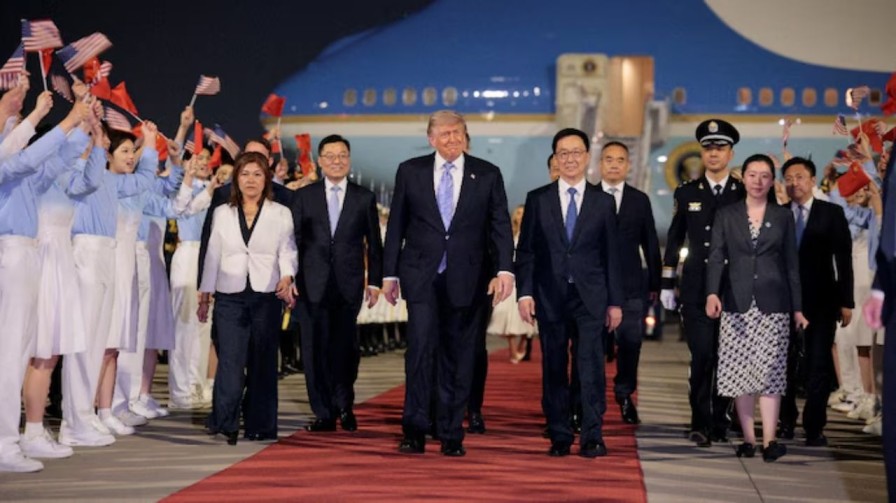
Trump visit sidelined in China as state media gives low-key coverage while mockery of the US President spreads widely on Chinese social media during the Beijing summit.
BEIJING — President Donald Trump’s high-stakes visit to China has drawn subdued coverage in Chinese state media, while social media platforms in the country have seen a wave of mockery targeting the U.S. leader and America’s global position.
According to reports, major Chinese newspapers placed news of Trump’s arrival in sidebars or gave it minimal attention, reflecting a deliberate downplaying of the summit by authorities. This approach contrasts with the pomp often associated with visits by world leaders to Beijing.
Observers note that Chinese social media has featured rare, seemingly tolerated ridicule of Trump. Posts and memes portray the United States as weakened by recent international challenges, including tensions over Iran, while highlighting China’s growing confidence on the world stage.
Low-Key Official Welcome
Trump’s meetings with Chinese President Xi Jinping focus on critical issues such as trade imbalances, technology competition, Taiwan, and broader geopolitical concerns. However, the public narrative within China appears carefully managed.
State media outlets have emphasized China’s steady progress and stability rather than spotlighting the bilateral talks. Analysts suggest this strategy underscores Beijing’s view of the visit as routine diplomacy rather than a pivotal event that requires extensive promotion.
Viral Mockery on Social Platforms: Trump Visit Sidelined in China
On platforms like Weibo and Douyin, users have shared content that pokes fun at Trump and U.S. foreign policy. Some posts use humor to contrast perceived American setbacks with China’s economic resilience and diplomatic posture.
This online activity stands out because Chinese internet censorship typically limits criticism of foreign leaders in such a direct manner. The tolerance for these posts may signal an official willingness to let public sentiment reinforce a narrative of national strength.
Experts point out that such digital expressions align with broader efforts by Chinese state-affiliated accounts to shape international perceptions through modern media tools, including AI-generated content in some cases.
Context of the Summit
The trip comes at a time of ongoing economic frictions between the world’s two largest economies. Both sides are navigating complex negotiations that could influence global markets, supply chains, and security dynamics in the Asia-Pacific region.
While formal talks continue behind closed doors, the contrasting public atmospheres in the two countries highlight the challenges in managing bilateral relations amid domestic political pressures.
Trump has previously described his approach to China as firm but pragmatic, aiming for deals that benefit American workers and businesses. Chinese officials, for their part, have stressed the importance of mutual respect and cooperation.
What This Means for U.S.-China Relations
The sidelined media treatment and online commentary could indicate China’s strategy to project strength without appearing overly eager for concessions. For the United States, the visit represents an opportunity to address key priorities directly with Xi.
As the summit unfolds, global markets and policymakers will be watching closely for any signs of progress or continued tensions. The blend of formal diplomacy and informal online discourse underscores how information flows now influence international affairs.