


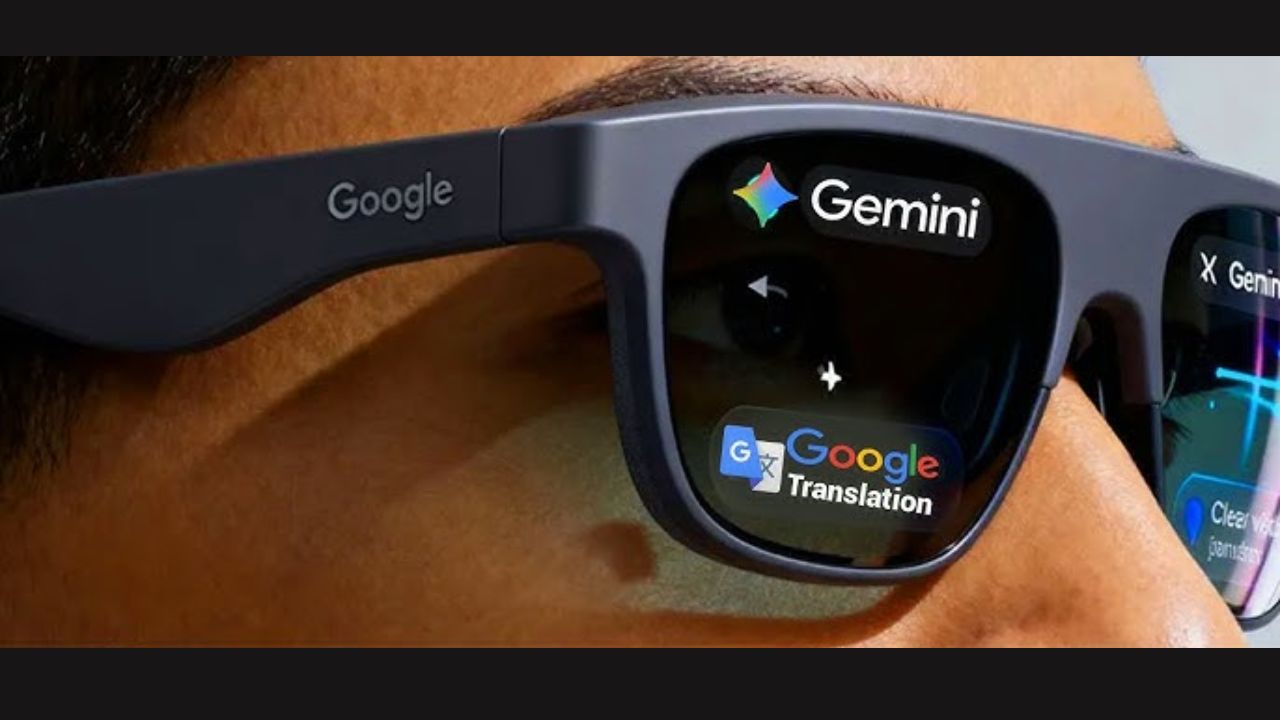
Google AI smart glasses debut at I/O 2026 with Gemini 2.5 Pro, real-time translation, live navigation, and fashion partnerships with Warby Parker and Gentle Monster.
Mountain View, California — Google took the stage this morning at its annual I/O developer conference and made something unmistakably clear: the era of the smartphone as the singular center of personal computing is drawing to a close. In its place, the company is betting on a new kind of device — one that sits on your face, sees what you see, hears what you hear, and quietly does the thinking for you.
The company offered its most detailed public look yet at its Android XR smart glasses, a product line that has been gestating behind closed doors for the better part of two years. Powered by Gemini 2.5 Pro — Google’s most capable multimodal AI model to date — the glasses are designed to serve as a constant, low-friction AI companion. No phone to pull out. No app to open. Just the world in front of you, with a layer of intelligent assistance laid gently over it.
Two Products, Two Philosophies
Google is approaching the smart glasses market with notable humility, at least in terms of design. Rather than releasing a single flagship device, the company announced two distinct categories of glasses built on the Android XR platform.
The first is what Google is calling a screen-free assistance model. These frames look, by all accounts, like a conventional pair of glasses. There is no visible display, no heads-up readout, no glowing lens. What is hidden inside the temples and bridge are microphones, speakers, and a camera — the essential plumbing for a hands-free Gemini experience. Ask the glasses a question, and Gemini answers through a discreet earpiece. Hold your gaze on something unfamiliar, and the AI quietly identifies it and tells you what it is.
The second category is more technically ambitious: a monocular XR model with a small in-lens display. This screen, visible only to the wearer, can surface turn-by-turn navigation directions, live translation captions during a foreign-language conversation, incoming messages, and contextual information about the things you are looking at. It is a private channel between the wearer and the AI — one that nobody else in the room can see.
Key Features Google AI Smart Glasses
- Gemini 2.5 Pro onboard for real-time translation, navigation, and visual understanding
- Integrated camera, microphones, and directional speakers in both models
- Optional monocular in-lens display for private information overlays
- Qualcomm Snapdragon XR2 Plus Gen 2 chipset for on-device processing
- Paired operation with an Android phone for full feature access
- Fashion partnerships with Warby Parker and Gentle Monster at launch
- Project Aura developer kit, built with XREAL, launching in 2026
The Fashion Dimension
Google learned a hard lesson with the original Glass project. A device worn on the face is not evaluated the same way a phone in your pocket is. People judge it for how it looks, how it makes them feel, and how others respond when they see it. That 2013 product, despite its genuine technical ambitions, became a cultural punchline in part because it looked unmistakably like a prototype.
This time, the company has gone out of its way to solve the aesthetics problem before it becomes a liability. Google confirmed partnerships with Warby Parker and Gentle Monster, two brands whose primary expertise is designing eyewear that people actually want to wear. Warby Parker brings democratic, everyday appeal — the kind of glasses worn by people who want something clean and unpretentious. Gentle Monster trades in fashion-forward, statement designs that have made it a fixture in luxury streetwear culture.
The message is deliberate. These are meant to look like glasses, first and foremost. The technology is secondary, at least from the outside. A longer-term partnership with Gucci — targeting a 2027 release — suggests Google is not planning to stop at accessible price points.
Taking on Meta’s Head Start
The timing of this announcement is not accidental. Meta’s Ray-Ban smart glasses have had a remarkable two years, selling more than seven million units in 2025 alone and commanding roughly 82 percent of the global smart glasses market. Demand has been so strong that Meta reportedly had to pause international expansion plans earlier this year simply because it could not manufacture enough units to meet it.
That context makes Google’s entry into the category more consequential. The company is not stepping into an empty room. It is walking into a room where Meta has already made the furniture comfortable and invited everyone to sit down. Google’s argument is that it has something Meta does not: the most capable AI assistant in the business, backed by years of work in natural language understanding, visual processing, and real-time translation.
Whether Gemini’s capabilities are enough to pry users away from a product they already enjoy is an open question. But the combination of AI depth, fashion-conscious hardware design, and a developer ecosystem built on the familiar Android platform gives Google a credible platform to compete from — something it has not always been able to say about its hardware ambitions.
Project Aura and the Developer Bet
Running parallel to the consumer glasses announcement is Project Aura, the wired XR glasses Google is co-developing with Chinese smart-glasses startup XREAL. Aura is a different kind of product — a wider field-of-view AR device with a 70-degree viewing angle, powered by an external Snapdragon processing puck that handles the heavy computational lifting. Developer kits are expected to ship later this year.
Aura is less a consumer product and more a signal. It tells developers what the Android XR platform is capable of at its upper bounds, and invites them to build experiences for a future where those capabilities eventually trickle down into more approachable, everyday hardware. For Google, the developer community is the lever that makes or breaks a platform, and seeding that community early is a well-established part of its playbook.
A Broader Ecosystem Vision
The smart glasses announcement did not arrive in isolation. It is one piece of a larger picture that Google spent the morning painting at I/O 2026 — a vision in which Gemini AI is not an app you open, but an ambient layer that runs through everything Google makes. Android 17, also featured prominently at the conference, brings deeper Gemini integration into the phone itself. Googlebooks, a new AI-first laptop platform built on Android, positions the company in the personal computer market with a similar philosophy. Across phones, laptops, and now glasses, the pitch is consistent: intelligence should be present, persistent, and invisible.
Whether consumers embrace that vision at scale depends on factors that no keynote can fully answer — battery life in real-world use, the accuracy of real-time translation in noisy environments, how comfortable the frames feel after four hours, and, perhaps most importantly, how ordinary people feel about wearing a camera on their face in everyday social situations. Those are the questions that will define whether 2026 is the year smart glasses finally become a mainstream product or another chapter in a long history of promising technology that arrived ahead of its time.
For now, the glasses are real, they are coming, and Google is as serious about them as it has ever been about anything outside of search. That alone marks a turning point.