Porsche Cayenne Electric 2026 reviewed — 1,140 hp, 800V charging, and a ride quality that sets a new standard for luxury electric SUVs. Full verdict inside.
Some cars arrive with an asterisk. Others arrive with a statement. The 2026 Porsche Cayenne Electric is firmly in the second category. This is the moment that Porsche’s best-selling, most commercially vital model finally abandons the internal combustion engine entirely — no hybrid fallback, no range extender, no apology. Just electricity, in quantities that would have seemed ludicrous a decade ago.
To put the headline figure in perspective: the peak output of 1,140 horsepower available in the top-spec Cayenne Electric surpasses the legendary Bugatti Veyron. In a family SUV. That number is achieved through an overboost function available for short bursts, and it is representative of Porsche’s broader philosophy here — that going electric should not mean going quiet, going soft, or going boring.
Design & Styling
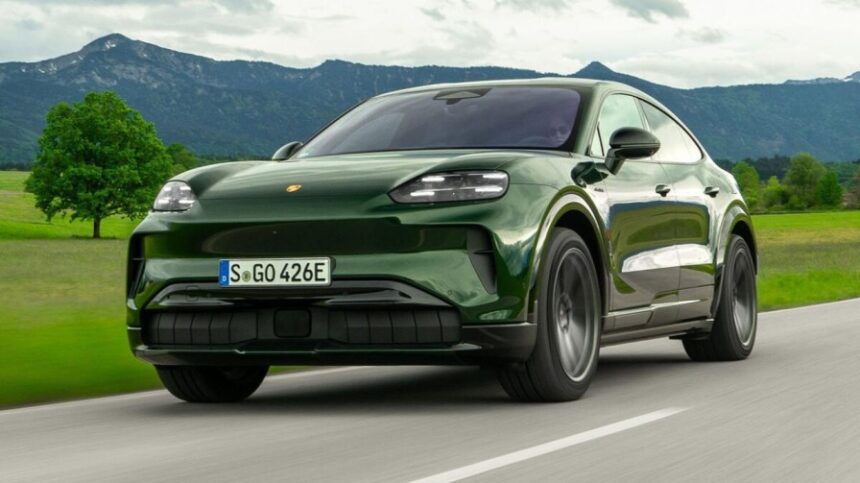
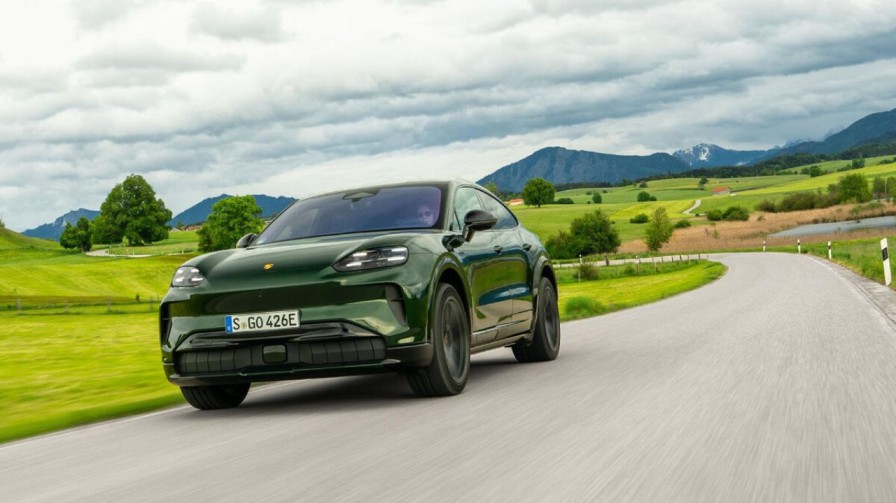
From the outside, Porsche has taken the sensible route: evolutionary rather than revolutionary. The Cayenne Electric retains the silhouette that buyers know and love, which matters enormously at this price point. The front fascia is sharper, with a closed-off lower grille and slimmer lighting signatures that signal its electric identity without screaming about it. The Coupe variant, which sits lower and carries a raked roofline, is the more visually dramatic of the two body styles — and, candidly, the more beautiful car.
Porsche has resisted the temptation to plaster aerodynamic cladding across every surface. Instead, the aerodynamic work happens at a subtler level: a smoother underbody, active elements in the front fascia, and a deployable rear spoiler that adjusts automatically based on speed and driving mode. Drag coefficient figures are class-competitive. The car looks planted and purposeful at a standstill and properly muscular in motion.
“Porsche has resisted the temptation to make the Cayenne look like a concept car. It looks like a Porsche — and that is precisely the point.”James Whitmore, DriveReport
Interior
Step inside and you encounter the most significant cabin evolution in the Cayenne’s history. The center console has been completely redesigned to take advantage of the flat floor afforded by the electric platform — there is noticeably more storage and a greater sense of physical space, even though exterior dimensions have not ballooned. The dashboard architecture is familiar Porsche: a large curved display dominates the center, flanked by physical controls for the most-used functions. It is one of the few luxury interiors that manages to feel both thoroughly modern and immediately intuitive.
More EV News
Material quality is exceptional throughout. Even at the base trim level, the surfaces you actually touch — door tops, armrests, the steering wheel rim — are covered in soft-grain leather or open-pore wood that feels genuinely premium. Opt for the higher specification packages and you gain materials like Race-Tex suede-effect surfaces and a dashboard trim finished in what Porsche calls Natural Grain Basalt Grey, which is simply one of the nicest dashboards this writer has sat behind in any category.
Rear seat space has improved meaningfully over the outgoing model, particularly in headroom for the Coupe — a historically tight spot. Two adults of average height can sit comfortably on longer journeys, and the climate control extends independently to the rear zone. Cargo space behind the rear seats is practical if unspectacular, and a front trunk adds useful daily-use storage for charging cables and smaller bags.
Powertrain & Performance
Here is where things get genuinely extraordinary. The entry-level Cayenne Electric deploys a twin-motor all-wheel-drive system producing outputs that would have qualified as supercar territory ten years ago. The range-topping Turbo GT variant is where that 1,140 horsepower peak figure lives — accessed through a Launch Control sequence that requires the driver to hold the brake, push the throttle, and essentially commit to the consequences.
In practice, the acceleration is a physical event. There is no drama in the powertrain itself — no gear change, no engine note building, no mechanical narrative — just an unbroken surge of force that seems to violate the car’s own visual mass. It pulls hard at 80 mph in ways that most sports cars cannot manage at 40. The overboost function is repeatable within certain thermal limits, and in everyday driving, even the standard power mode delivers more than enough performance to feel quick in any real-world situation.
The 800-volt electrical architecture — borrowed and adapted from the Taycan platform — means fast charging is genuinely fast. Porsche quotes peak DC charging rates that allow meaningful range recovery in under 25 minutes on compatible hardware. For a car of this weight and output, that figure represents a genuine achievement in thermal management and battery engineering.
Ride & Handling
This is the area that separates the Cayenne Electric from the merely good and places it among the genuinely great. Electric SUVs have a structural problem: they are heavy, and weight is the enemy of dynamic finesse. Porsche has addressed this with an adaptive air suspension system that continuously reads road surface inputs and adjusts damping in milliseconds — a system far more sophisticated than what the previous generation offered.
On road, the Cayenne Electric feels astonishingly composed for its weight. It corners with a confidence that initially seems implausible, the body motion controlled and measured rather than suppressed in a way that feels artificial. Turn the drive mode selector to Sport Plus, and the character tightens noticeably — the steering gains weight and a more direct feel, the throttle response sharpens, and the car settles into a lower stance. In Comfort mode on the highway, it floats over road imperfections with the kind of ride quality that has traditionally been the exclusive province of full-size luxury sedans.
The braking system deserves specific mention. Porsche has calibrated the regenerative braking to feel genuinely natural under most driving conditions — a detail that many competitors still get wrong. The transition between regenerative retardation and the friction brakes is seamless enough that most drivers will never notice it is happening. One-pedal driving is available for those who prefer it, though it is not the default setting.
Range & Running Costs
Real-world range figures for electric vehicles are always a negotiation between the official estimates and what owners actually see. In mixed driving conditions — a combination of highway and urban use with moderate climate control demand — the Cayenne Electric delivers figures that are competitive for its class and weight. The 800-volt architecture means that when you do need to stop and charge, you are not waiting long.
Running costs relative to the combustion-engine Cayenne it replaces are meaningfully lower. Home charging on a Level 2 setup translates to a cost-per-mile that is a fraction of what premium gasoline commands. Insurance costs track similarly to the outgoing model at equivalent trim levels. Porsche’s warranty coverage is competitive, and the residual value story for Cayenne has historically been strong — a trend the electric model seems well-positioned to continue.
What We Liked
- Extraordinary performance at every output level
- Exceptional ride and handling balance
- Premium interior materials and thoughtful ergonomics
- Fast 800-volt charging architecture
- Retains the Cayenne’s practical, family-usable character
- Natural-feeling brake regeneration calibration
Room to Improve
- Real-world range trails some lighter electric rivals
- Price rises sharply with desirable options selected
- Weight is palpable on mountain switchbacks
- Rear cargo area is unremarkable for the class
Final Verdict: Porsche Cayenne Electric 2026
The 2026 Porsche Cayenne Electric is not a transitional product or a compliance exercise. It is a confident, fully realized statement of intent from a brand that has spent two decades proving that performance and everyday usability are not mutually exclusive.
The move to a pure-electric powertrain has not diluted what the Cayenne is — if anything, it has amplified it. The performance is astonishing, the ride quality is genuinely class-leading, and the interior sets a new benchmark in this segment. If you are in the market for a luxury electric SUV and driving satisfaction matters to you, this is the car to beat.