

Highest FD Rates in January 2026: Fixed Deposits (FDs) have always been a favorite among Indian savers. Whether you’re saving for a wedding, a dream vacation, or just want to park your money safely while earning a decent return, FDs offer stability and peace of mind. With the New Year, many banks have revised their FD interest rates, and if you’re planning to invest, now is the perfect time to explore your options.
In this article, we’ll break down which banks are offering the highest FD rates in January 2026, tips to maximize your returns, and everything you need to know before booking your next Fixed Deposit.
What Is a Fixed Deposit and Why It Matters
A Fixed Deposit is a financial instrument provided by banks and non-banking financial companies (NBFCs) where you deposit a lump sum of money for a fixed tenure and earn guaranteed interest. Unlike savings accounts, FDs offer higher interest rates, making them ideal for conservative investors who prefer predictable returns.
Benefits of FDs:
- Guaranteed Returns: The interest rate is fixed at the time of investment, so you know exactly how much you’ll earn.
- Safety: Deposits in banks are insured up to ₹5 lakh under the Deposit Insurance and Credit Guarantee Corporation (DICGC).
- Flexible Tenures: You can choose tenures ranging from 7 days to 10 years based on your financial goals.
- Tax Options: You can opt for cumulative or non-cumulative FDs, depending on whether you want interest payouts periodically or at maturity.
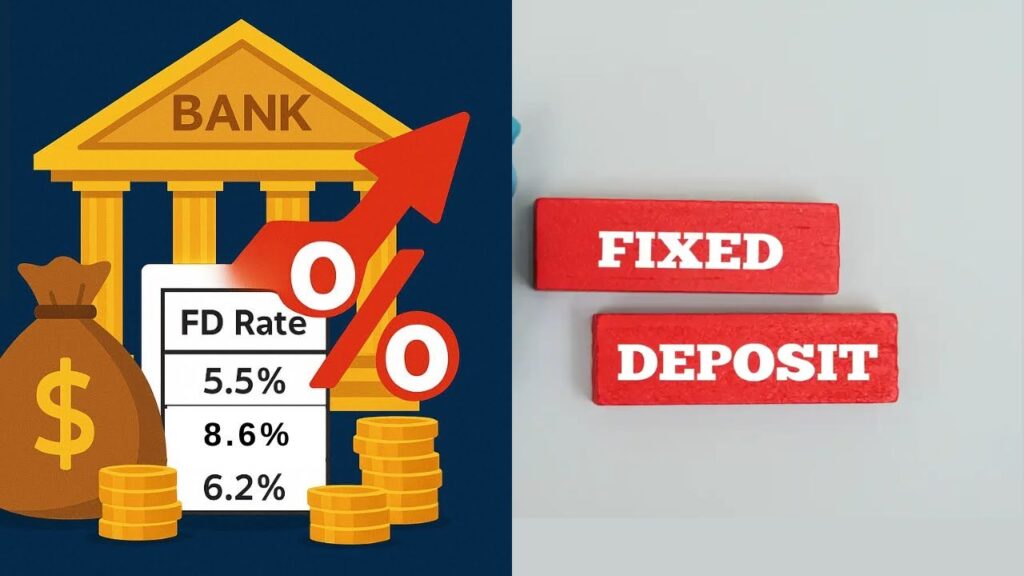
Factors Affecting FD Interest Rates
FD rates are influenced by multiple factors, and understanding them can help you make an informed choice:
- Bank Type: Generally, small finance banks and private banks offer higher rates than large public sector banks.
- Tenure: Longer-term FDs often offer better interest rates, though this is not always linear.
- Deposit Amount: Some banks provide higher rates for larger deposits, while others have a flat rate irrespective of the amount.
- Senior Citizens: Most banks offer an extra 0.25% to 0.75% interest for senior citizens.
Highest FD Rates Offered by Banks in January 2026
Here’s a snapshot of some of the top-performing banks and their interest rates for various tenures:
| Bank | Tenure | Interest Rate (%) | Special Notes |
|---|---|---|---|
| SBI | 1-5 years | 6.50% – 6.75% | Public sector bank; safe and reliable |
| HDFC Bank | 1-5 years | 6.50% – 6.75% | Private bank; slightly better for online FDs |
| ICICI Bank | 1-5 years | 6.50% – 6.80% | Senior citizens get an additional 0.50% |
| Axis Bank | 1-5 years | 6.50% – 6.85% | Good online FD options |
| IDFC First Bank | 1-5 years | 7.00% – 7.20% | Higher rates for small to medium deposits |
| RBL Bank | 1-5 years | 6.75% – 7.25% | Attractive rates for senior citizens |
| Bajaj Finance | 1-5 years | 7.20% – 7.50% | NBFC; cumulative and non-cumulative FDs available |
| Equitas Small Finance Bank | 1-5 years | 7.10% – 7.35% | Focused on higher rates for retail depositors |
⚠️ Pro Tip: Always check the latest rates online or with the bank branch, as these rates are revised frequently and may vary by location.
Tips to Maximize Your FD Returns
Booking an FD isn’t just about picking the bank with the highest rate. Here’s how you can maximize your earnings:
1. Compare Multiple Banks
Even a 0.25% difference in FD rates can significantly impact your returns, especially for large deposits. Use online FD calculators to see exact maturity amounts before finalizing.
2. Consider Small Finance Banks
Smaller banks often offer higher interest rates to attract depositors. While they are generally safe, make sure the bank is regulated by the RBI and has a strong reputation.
3. Ladder Your FDs
Instead of locking all your money in a single FD, consider spreading it across multiple tenures. This strategy, called FD laddering, ensures liquidity while taking advantage of varying interest rates.
4. Senior Citizen Benefits
If you’re a senior citizen, don’t miss the extra interest offered. Even a 0.50% boost can add significantly to your earnings over long-term FDs.
5. Opt for Cumulative or Non-Cumulative FDs Wisely
- Cumulative FD: Interest is compounded and paid at maturity; ideal for wealth creation.
- Non-Cumulative FD: Interest is paid monthly or quarterly; good for regular income needs.
How to Calculate FD Returns
Calculating FD returns helps you plan better. Most banks use compound interest for cumulative FDs. The formula is:A=P(1+nr)n⋅t
Where:
- A = Maturity amount
- P = Principal amount
- r = Annual interest rate (in decimal)
- n = Number of times interest is compounded in a year
- t = Time period in years
For example, if you invest ₹5 lakh at 7% per annum for 3 years compounded quarterly, your maturity amount will be approximately ₹6.23 lakh.
Tip: Use online FD calculators to avoid manual errors.
Tax Implications of FDs
FD interest is taxable under the Income Tax Act. Here’s what you should know:
- TDS (Tax Deducted at Source): Banks deduct TDS at 10% if interest exceeds ₹40,000 (₹50,000 for senior citizens) in a financial year.
- Income Tax Slab: Interest earned is added to your income and taxed as per your applicable slab.
- Form 15G/15H: If your total income is below the taxable limit, submit these forms to avoid TDS.
Friendly reminder: Consider tax-efficient options like tax-saving FDs under Section 80C if you want to save on taxes while investing.
Online vs Offline FD Booking
Today, many banks allow you to open FDs online without visiting a branch. Here’s a quick comparison:
| Feature | Online FD | Offline FD (Branch) |
|---|---|---|
| Convenience | ✅ Anytime, anywhere | ❌ Branch visit required |
| Rate | ✅ Usually same, some banks offer 0.05-0.10% extra online | ✅ Standard rate |
| Documentation | ✅ Minimal, digital KYC | ✅ Paper-based KYC |
| Instant Booking | ✅ Immediate confirmation | ❌ May take 1-2 days |
Pro Tip: Online FDs save time and often come with slightly better rates.
Things to Keep in Mind Before Booking an FD
- Tenure Alignment: Don’t lock money you may need urgently; premature withdrawals often attract penalties.
- Bank Reputation: Stick to RBI-regulated banks with good customer service.
- Rate Variability: While FD rates are fixed at booking, they may vary for new deposits if rates change.
- Inflation Impact: Consider the real rate of return after accounting for inflation, especially for long-term FDs.
Conclusion
Fixed Deposits remain one of the safest and most reliable investment options in India. With banks offering competitive interest rates in January 2026, it’s a great time to park your money wisely. By comparing banks, choosing the right tenure, and using strategies like laddering, you can maximize your returns while keeping your investment secure.
Whether you’re a first-time investor or a seasoned saver, understanding FD rates, tax implications, and banking options ensures that your money works harder for you.
FAQs About Fixed Deposits
1. What is the best FD rate in January 2026?
Small finance banks and NBFCs like Bajaj Finance and IDFC First Bank are offering the highest rates, up to 7.50% per annum.
2. Can I break my FD before maturity?
Yes, but banks usually charge a penalty, which can reduce your overall returns.
3. Are FD returns taxable?
Yes, the interest earned is taxable under your income tax slab. Senior citizens also need to pay tax but can benefit from exemptions.
4. How can I maximize FD returns?
Compare rates across banks, consider online bookings, ladder FDs across tenures, and take advantage of senior citizen benefits if applicable.
5. Is it safe to invest in small finance banks?
Yes, as long as the bank is RBI-regulated and has a strong reputation. Deposits up to ₹5 lakh are insured under DICGC.