

Budget 2026 Income Tax Slabs: As Budget 2026 approaches, expectations for significant cuts to income tax slabs, after considerable relief in recent years, appear low. The focus is likely to be on refining the new tax regime, simplifying compliance, and ensuring a smooth transition to the Income Tax Act, 2025, while maintaining fiscal discipline.
With the Union Budget 2026 on the horizon, Finance Minister Nirmala Sitharaman faces the challenging task of sustaining high growth while maintaining fiscal discipline. Given the stable growth in tax revenues, the government will need to carefully balance the need to accelerate economic momentum, support capital expenditure, and provide meaningful relief to the middle class, all without increasing the fiscal deficit.
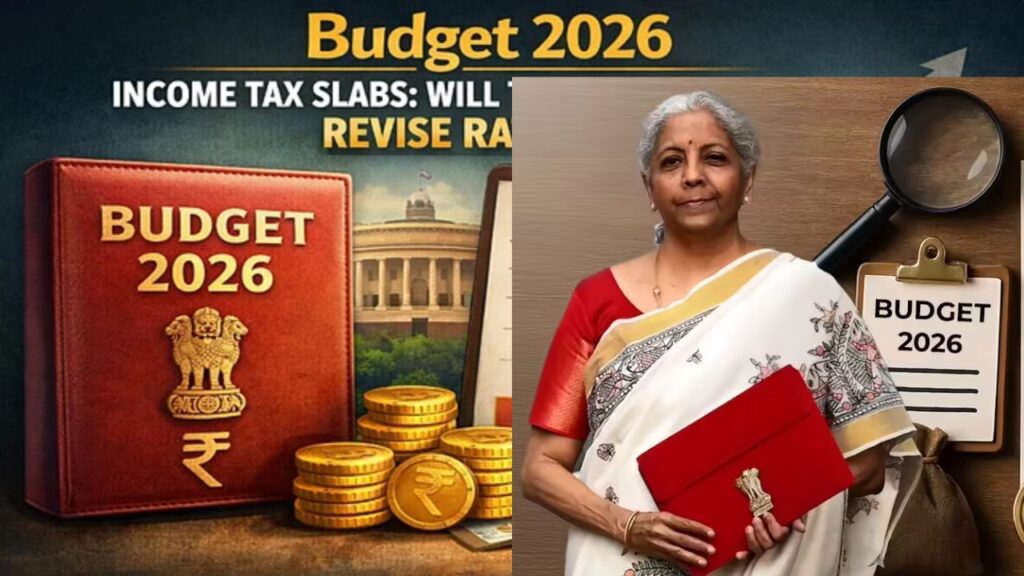
According to Taxmann, the budget is likely to be evolutionary rather than revolutionary, laying the foundation for long-term structural changes while addressing short-term economic challenges. It is imperative that this budget prioritizes a smooth transition to the Income Tax Act, 2025, emphasizes the adoption and development of India-specific AI, makes Indian entities competitive in a new world of protectionist countries, and focuses on R&D – all while maintaining fiscal discipline.
CA Naveen Wadhwa, Vice-President of Taxmann, explains that with the new Income Tax Act, 2025 now in the implementation phase, the government may prioritize a smooth transition for taxpayers. Instead of making major changes, the emphasis could be on providing certainty, reducing litigation, and streamlining compliance. “However, there is a significant opportunity to rationalize the complex TDS and TCS framework by consolidating the multitude of existing rates into three or four broad categories.
Since it is expected that 85-90 percent of taxpayers have shifted to the new tax regime, especially given the significantly higher tax-free limit, speculation is growing that the old regime may now be completely phased out,” he says.
Tax experts say that India’s income tax structure has undergone significant changes over the years. The 2020 budget introduced a major structural shift, including changes to income slabs and tax rates, along with the introduction of an optional concessional tax regime.
However, this also resulted in taxpayers losing some of the deductions and exemptions available on their income. The 2023 budget further solidified this shift when the new tax system was made the default system, clearly indicating the government’s priority of focusing on a simplified tax structure.
Radhika Viswanathan, Executive Director at Deloitte India, says, “The 2025 budget further adjusted the income slabs and tax rates and increased the rebate. These changes meant that taxpayers with income up to ₹12 lakh had no tax liability, while the highest marginal rate of 30 percent applied to income above ₹24 lakh.”
This move provided much-needed relief to a large number of individual taxpayers, especially salaried individuals, increasing their disposable income and supporting overall consumption in the economy. In FY 2023-24, approximately 72 percent of individual taxpayers opted for the new tax system, and this trend is expected to accelerate following the recent changes.
Viswanathan says, “Given the significant relief provided in the previous budget, the likelihood of further reductions in income tax slabs in the upcoming budget seems low. However, this doesn’t rule out the possibility of other measures to ease the tax burden. The government could still consider rationalizing surcharge rates, particularly for high-income taxpayers, to address concerns about excessively high effective tax rates.”
Another potential approach is to revisit the old tax regime, updating the tax slabs and deduction limits, which have remained unchanged for several years. This would be particularly relevant for taxpayers who still rely on deductions and exemptions.