

Union Budget 2026: With the new tax regime now positioned as the default option, expectations are growing that Finance Minister Nirmala Sitharaman could use the Union Budget 2026 to strike a better balance between lower tax rates and meaningful deductions that offer real relief to taxpayers.
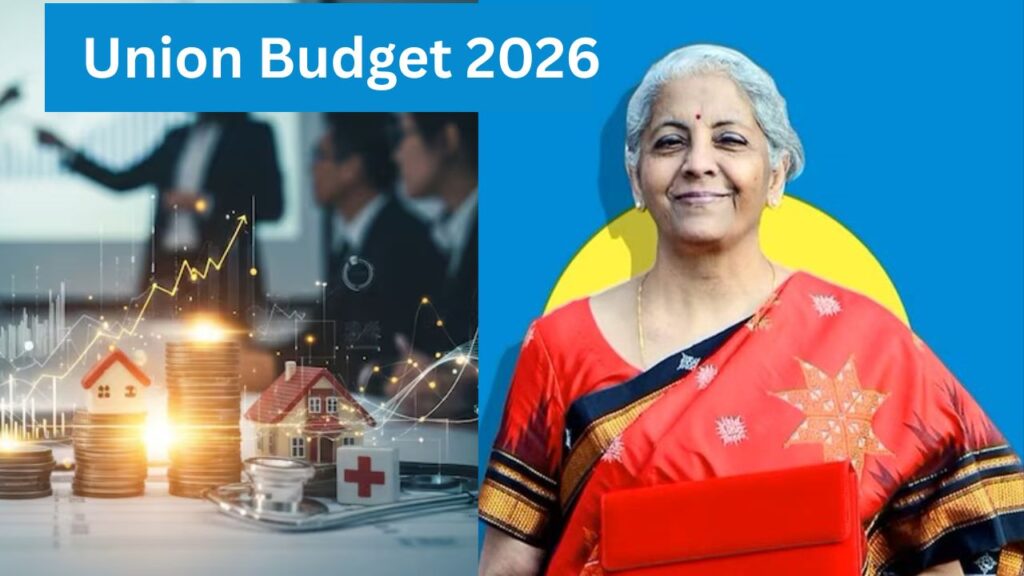
As the Budget approaches, tax experts are increasingly calling on the government to broaden the scope of deductions available under the new regime. Home loan interest, health insurance premiums, and healthcare-related expenses are emerging as key areas where targeted incentives could ease financial pressure on households.
Healthcare costs remain a major concern
Rising medical inflation continues to be one of the biggest challenges for Indian families. Estimated at 11.5–14 percent, healthcare inflation in India remains among the highest in Asia. While policy measures such as removing GST on insurance premiums and allowing 100 percent foreign direct investment in insurance could improve affordability and strengthen the sector, escalating medical costs are still straining household budgets.
Prashant Mishra, Founder and CEO of Agnam Advisors, believes the new tax regime needs to be made more practical and inclusive. “From the perspective of a SEBI-registered investment advisor, the focus should be on simplifying the new tax regime by bringing in critical deductions such as housing loan interest and medical insurance under Section 80D,” he said. Mishra also suggested increasing the Section 80D limit to ₹50,000 for self and family and ₹1 lakh for senior citizens, along with introducing a 25 percent tax slab for individuals earning ₹30–50 lakh. Such changes, he said, would reduce compliance complexity and allow families to channel more resources into productive investments.
Push for preventive healthcare incentives
Experts also see Budget 2026–27 as an opportunity to strengthen healthcare affordability through higher public spending and a stronger emphasis on preventive care. According to Srikanth Kandikonda, Chief Financial Officer at ManipalCigna Health Insurance, India’s public health expenditure still falls short of global standards and remains below the National Health Policy target of 2.5 percent of GDP.
“Increasing public health allocation would help strengthen primary care infrastructure, expand preventive services, and ease the financial burden on citizens,” Kandikonda said.
He added that encouraging preventive healthcare through tax incentives could significantly reduce long-term treatment costs. Industry studies show that preventive care leads to fewer hospitalisations and better health outcomes. “Introducing separate and enhanced tax benefits for OPD expenses and preventive health screenings — over and above the current limits under Section 80D — could drive wider adoption of preventive healthcare,” he said, adding that such provisions would be especially beneficial for senior citizens if included under the new tax regime.
Broader reforms for long-term savings and wealth planning
Beyond healthcare, experts have also called for improvements in retirement savings incentives and tax benefits for investments aligned with long-term and sustainable goals. Mishra suggested enhancing deductions for retirement planning and offering incentives for green projects or Alternative Investment Funds (AIFs) based in GIFT City, particularly for high-net-worth individuals.
He also highlighted the need to rationalise surcharges, extend tax-neutral treatment for LLP reorganisations, and clarify TDS rules on partner remuneration. “These steps would streamline family office operations and support smoother intergenerational wealth transfers,” he said. Additional family-focused measures, such as higher allowances for elderly care and childcare, could help address demographic shifts and boost productivity among working professionals.
Demand for a simpler, predictable tax regime
Shubham Gupta, CFA and Co-founder of Growthvine Capital, summed up the broader sentiment ahead of the Budget. “As we move closer to the Union Budget 2026, both taxpayers and businesses are looking for a simpler, fairer, and more predictable new tax regime,” he said, adding that such reforms could play a meaningful role in improving household savings and consumption.