


Andrej Karpathy joins Anthropic to lead pre-training research, leaving behind OpenAI roots and his vibe coding legacy to help Claude learn faster than ever before.
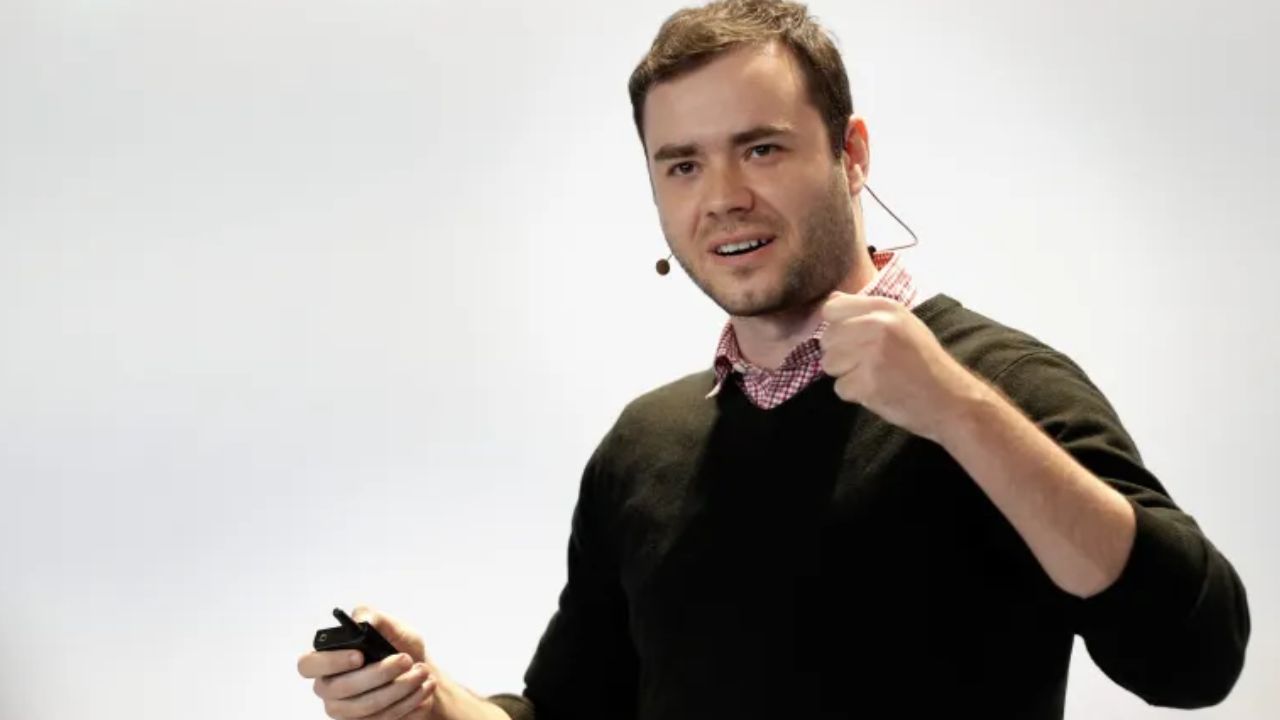
Andrej Karpathy, a founding member of OpenAI and one of the most closely followed voices in machine learning, is now at Anthropic — building a team that will teach Claude to accelerate its own training.
n a Tuesday morning, Andrej Karpathy posted two words that rippled through the artificial intelligence industry faster than almost any product announcement could: “I’ve joined Anthropic.” Within an hour, the post had collected nearly three million views. By afternoon, it was clear that one of the most significant talent moves of the current AI era had just happened in plain sight, compressed into a single line on a social media platform.
Karpathy said the next few years at the frontier of large language models would be “especially formative,” and that he was eager to return to research. He started that same week, joining Anthropic’s pre-training team led by Nick Joseph. His mandate, according to the company, is to build a group focused on using Claude to accelerate the large-scale training runs that give the model its core knowledge and capabilities.
A Resume Unlike Any Other in AI
To understand why this hire matters, it helps to trace the arc of what Karpathy has built and where he has been. He was among the small group of researchers who co-founded OpenAI in 2015, when the organization was still a nonprofit with ambitious but largely untested goals. After several years there, he left to run artificial intelligence at Tesla, overseeing the self-driving and neural network work that would eventually power Autopilot and Full Self-Driving. He returned to OpenAI in 2023, only to leave again about a year later to start Eureka Labs, an AI-native education company.
Each of those moves was, in its own way, a statement. But joining Anthropic feels different. Anthropic was founded by Dario Amodei, Daniela Amodei, and several other researchers who left OpenAI specifically over disagreements about safety and the direction of the organization. For Karpathy to land there now, having spent years in and around OpenAI’s orbit, reads as something more than a career change. It looks like a considered wager on which company he believes is building something that matters.
The Tweet That Changed How Business Thinks About Software
Before any of this week’s news, Karpathy was already living in a different kind of fame. In February 2025, he posted that there was a “new kind of coding” he wanted to describe. He called it vibe coding. The idea was straightforward: instead of writing precise lines of code, you describe what you want in plain language and let the AI model handle the rest. You lean back. You vibe.
The phrase escaped the industry and infected the business world, which turned its back against software companies and raced to build its own bespoke agents.”
The concept traveled far beyond developer circles. Executives, entrepreneurs, and product teams in industries that had never thought deeply about software development suddenly had a vocabulary for what they wanted to do. Companies that had relied on third-party software vendors began asking why they were paying for tools they could theoretically prompt into existence.
That question, multiplied across thousands of organizations, helped trigger what came to be called the “SaaSpocalypse” — a wave of stock market anxiety and real valuation losses as investors recalculated the future of subscription software businesses. Tens of billions of dollars in market capitalization shifted. Collins Dictionary named vibe coding its Word of the Year. The AI model Karpathy cited in that original tweet was Anthropic’s Claude.
The Karpathy Loop and the Next Frontier
The vibe coding tweet was memorable, but it was a more technical post in March that previewed what his work at Anthropic might actually look like. Karpathy wired up an AI coding agent, handed it a small language model, and let it run without human supervision for two days. The agent spent that time testing and adjusting its own training code, running roughly 700 experiments and identifying 20 optimizations on its own. When those same adjustments were applied to a larger model, training time fell by 11 percent.
He called this “autoresearch,” and described it with characteristic frankness as “part code, part sci-fi, and a pinch of psychosis.” The research community quickly took to calling the approach the Karpathy Loop. It is, in essence, the beginning of AI systems that can make themselves more capable without waiting for a human researcher to identify the next improvement. At Anthropic, this is now his job — at scale, with resources, and with Claude as both the tool and the subject.
From the Rubik’s Cube to Large Language Models
Long before any of this, Karpathy ran a YouTube channel under the name “badmephisto,” where he taught a generation of competitive puzzle solvers how to get faster at the Rubik’s Cube. His insight was specific: instead of seeing the cube as 54 colored stickers, you had to see it as 26 individual “cubies” — the actual physical pieces. By working at the right level of abstraction, on the right small unit, you could move the whole thing efficiently. He could solve a standard Rubik’s Cube in about 17 seconds.
The puzzle changed over the years. Neural networks replaced colored tiles. Language models replaced neural nets. But the operating principle that made Karpathy good at each of them is recognizable from that YouTube channel: get a small enough system fully under control, understand its structure precisely, and you can move something much bigger.
What It Means for Anthropic, and for the Race
Anthropic has had a remarkable stretch by almost any measure. The company has released a series of highly regarded models, seen its annual revenue growth move on what one observer described as a “nearly parabolic” trajectory, and is reportedly in talks on a new funding round that could push its valuation toward $1 trillion. Adding Karpathy to that moment is not a minor footnote. He carries with him a following of nearly two million people who pay attention to what he says about the direction of the field, and a research track record that few people working in AI today can match.
For OpenAI, the symbolism is harder to ignore. Karpathy was there at the beginning. He came back. And now he has chosen to work at the company that, more than any other, represents a direct philosophical and commercial challenge to what OpenAI has become. In a field where talent, credibility, and momentum are all deeply intertwined, that choice carries weight that no press release could manufacture.
The next few years at the frontier of large language models will be, as Karpathy himself put it, especially formative. He has decided where he wants to be for them.