


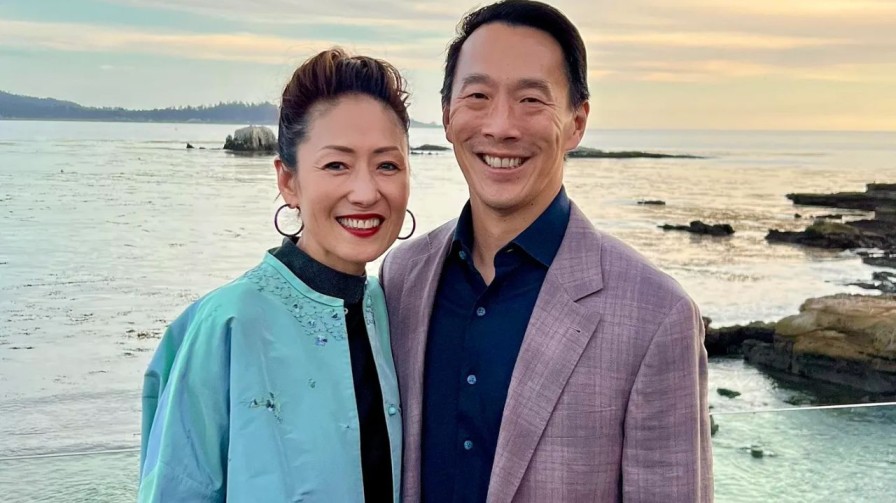
Billionaire: Investor Kenneth Hao’s says philanthropists can have an impact on innovation. His gift targets AI, hospital infrastructure and research collaboration across institutions.
Something significant is happening on American university campuses, and it is not coming from Washington. As federal research budgets face headwinds and public funding for higher education retreats in real terms, a cohort of technology billionaires is stepping into the gap with a clarity of purpose that previous generations of philanthropists rarely matched. They want to win the artificial intelligence race, and they have decided that universities are where that race gets run.
In just the past few weeks, two of the largest individual gifts in the history of American higher education have been announced within days of each other, both with artificial intelligence at the center. The pattern is not coincidence. It reflects a deliberate strategic calculation by some of the wealthiest people who have ever lived about where the next era of technological leadership will be decided.
The question worth sitting with is not simply whether these gifts are large, because they obviously are. The more interesting question is what they are trying to build, who decides, and what gets left out when private money fills space that public institutions used to occupy.
The Billionaire Behind the Biggest USC Gift in Memory
Mark Stevens is not a household name outside of Silicon Valley, but within the venture capital world he is regarded as one of the shrewdest technology investors of the past three decades. As a partner at Sequoia Capital in the early 1990s, he led the firm’s investment in a then-unknown chipmaker called Nvidia, run by a young engineer named Jensen Huang. That bet, made when Nvidia was genuinely small and unproven, is now worth an almost incomprehensible amount of money.
Stevens left Sequoia in 2012 to run his own family office, S-Cubed Capital, in Menlo Park. His net worth is currently estimated at $12.5 billion. He and his wife Mary signed the Giving Pledge in 2013, committing to donate the majority of their fortune. USC has been a consistent beneficiary over more than two decades, but the scale of the new commitment represents a different order of ambition entirely.
“Schools risk falling behind if they don’t move fast on AI, especially as much of the cutting-edge research has migrated to private companies.”
The $200 million gift will fund the USC Mark and Mary Stevens School of Computing and Artificial Intelligence, a renamed and dramatically expanded version of the university’s existing School of Advanced Computing.
The initiative spans the health sciences, where AI is being applied to neurodegenerative disease research; national security, through USC’s Institute for Creative Technologies, a U.S. Army-affiliated center using AI for military training simulations; business education, with a new undergraduate degree in Artificial Intelligence for Business; and the arts, where USC’s top-ranked game design and film programs are integrating AI production tools.
USC President Beong-Soo Kim described the gift as arriving at “a critical inflection point for our society,” a phrase that has become almost standard in announcements of this kind, but that in this case reflects a genuine urgency that Stevens himself has articulated plainly. The worry driving these gifts is not abstract. It is the specific concern that the frontier of AI research is moving from university labs into well-funded private companies, and that if universities do not attract and retain top researchers, the institutional capacity to train the next generation of talent will erode faster than most people realize.
Michael Dell’s Full-Circle Moment in Austin
For Michael Dell, the gift to the University of Texas at Austin carries a weight that goes well beyond philanthropy. He enrolled at UT Austin in 1983 as a premed student, started selling customized computers from his dorm room, and dropped out before his sophomore year to build what would become Dell Technologies, now a company worth roughly $140 billion. His dorm room is being renamed Dell House. The medical center he is funding carries his name. And the university he never quite finished graduating from is now the recipient of the largest single donation in its history by a considerable margin.
The Dells’ combined giving to UT Austin now exceeds $1 billion, making them the first donors to cross that threshold for the institution. The $750 million gift will fund the UT Dell Medical Center, a planned facility on a 300-plus-acre research campus in northwest Austin scheduled to open in 2030. Unlike most hospital expansions, this one is being designed from scratch with AI built into the foundation rather than retrofitted into existing infrastructure, an approach that the university says will enable fundamentally different approaches to early disease detection, personalized care, and research integration.
The project will be developed in partnership with MD Anderson Cancer Center, which will integrate its cancer care expertise into the new campus. Texas Governor Greg Abbott framed the announcement in competitive terms, suggesting that after leading in technology, energy, and business, Texas was now positioned to lead in healthcare innovation as well. Whether that framing holds up will depend on execution over a long horizon, but the ambition embedded in the plan is genuinely substantial.
Dell told CNBC that his thinking about healthcare grew out of watching the Austin metropolitan area roughly double in population since 2000, creating a city that had grown faster than its medical infrastructure could keep pace with. Investing in the local health system, he said, was about giving residents the ability to seek care at home rather than traveling out of state for advanced treatment. The personal and the strategic are, in this case, genuinely difficult to separate.
A Wave, Not an Outlier
Stevens and Dell are not isolated cases. They are the most visible examples of a broader pattern that has been building for several years and has accelerated sharply in 2025 and 2026 as AI investment has intensified across every sector of the economy.
| Donor | Institution | Amount | Focus |
|---|---|---|---|
| Michael & Susan Dell | UT Austin | $750M | AI-native hospital and research campus2026 |
| Mark & Mary Stevens | USC | $200M | University-wide AI initiative2026 |
| Phil Knight | Oregon Health & Science U. | $2B | Cancer research institute2025 |
| Stephen Schwarzman | MIT | $350M | AI computing collegePrior |
| Michael Bloomberg | Johns Hopkins | $1.8B | Medical school tuition coverage2024 |
| MacKenzie Scott | HBCUs (16 institutions) | $1B+ | Unrestricted institutional supportOngoing |
| David Duffield | Cornell Engineering | $371.5M | Engineering college strategic priorities2026 |
The cumulative scale of these commitments is extraordinary. Taken together, the major university gifts announced or pledged in the past two years represent tens of billions of dollars flowing into higher education from private sources, with AI-related research and computing infrastructure as the single most common stated priority.
Rutgers University Associate Dean for Research Marybeth Gasman noted that patterns in philanthropy tend to be self-reinforcing. High-profile individual contributions typically attract more giving in their wake, and at a moment when higher education is navigating serious political and financial pressure, that dynamic could matter enormously. Whether the wave builds on itself or remains concentrated among a handful of elite institutions is one of the more consequential open questions in American education right now.
The Questions That Do Not Come With a Press Release
It would be a mistake to read this trend as straightforwardly good news without examining its complications. Private mega-gifts to universities come with their own set of dynamics that researchers and education policy analysts have been tracking with increasing attention.
The most obvious concern is concentration. The institutions receiving the largest gifts, USC, MIT, UT Austin, Johns Hopkins, are already among the most well-resourced in the country. MacKenzie Scott’s approach of directing large unrestricted gifts to historically Black colleges and universities has been widely praised precisely because it runs against that grain, sending money to institutions that have long operated with far less than they need. But Scott’s model remains the exception, not the rule.
There is also the question of who shapes research priorities when private donors write nine-figure checks. The naming of buildings, schools, and entire colleges after donors is standard practice, but the influence of major funders on what questions get asked, which problems get funded, and which research directions receive institutional support is a subtler and more contested issue. When a donor with a strong position on AI’s role in the economy funds a university’s AI programs, the independence of that research is not automatically compromised. But the tension is real, and honest observers acknowledge it.
Finally, there is the structural shift that underlies all of this. Decades of declining public investment in state universities has created a funding vacuum that private philanthropy is now partially filling. That may be better than leaving the gap unfilled. But it also means that the priorities of the wealthiest individuals in the country increasingly shape the direction of institutions that were originally built to serve a much broader public purpose. That is a trade-off worth naming clearly, even when the donors involved are acting in good faith and the gifts themselves are genuinely significant.