


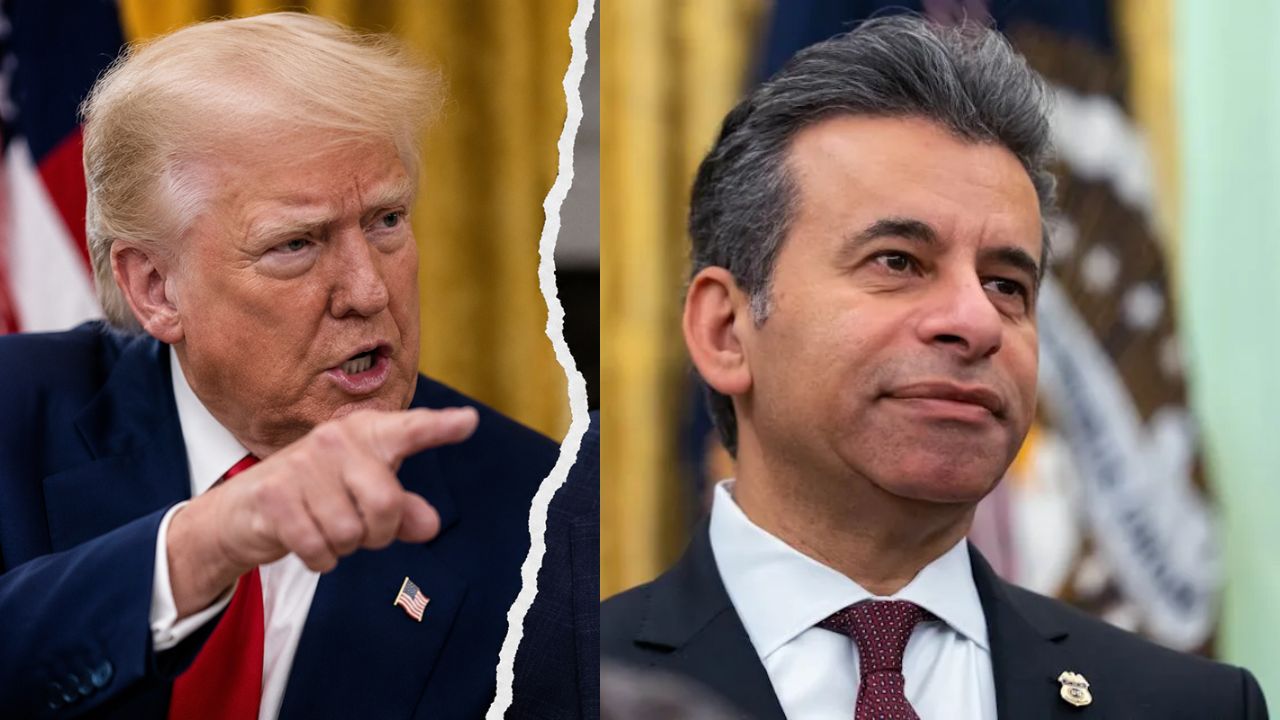
FDA Commissioner Marty Makary Resigns May 12, 2026, after Trump forced him to approve flavored vapes he opposed, ending 13 months of layoffs, staff chaos, and policy clashes.
Dr. Marty Makary resigned as commissioner of the Food and Drug Administration on Tuesday, ending one of the more turbulent chapters in the agency’s recent history. The departure, confirmed by a senior administration official, came after President Donald Trump had already quietly signed off on a plan to fire him, and after a specific, deeply personal dispute over a product Makary believed should never have been authorized.
The immediate trigger, according to multiple people familiar with the situation, was the FDA’s decision on May 6 to approve the sale of fruit-flavored e-cigarettes manufactured by Glas Inc. Makary had resisted the authorization for weeks. He was overruled. Trump had grown visibly angry with what the White House viewed as foot-dragging on a key policy priority, and according to reporting from The Wall Street Journal and CNN, the president confronted Makary directly. The FDA reversed course shortly after. Days later, Makary was gone.
Speaking to reporters outside the White House as he was preparing to depart for meetings with China’s President Xi Jinping, Trump offered an exit statement that was warm in tone but candid in its subtext. “He’s a great doctor, and he was having some difficulty,” the president said. “But he’s going to go on and he’s going to do well.” Trump later posted a screenshot of Makary’s resignation text to Truth Social.
In it, Makary described his time in the role as “the honor of a lifetime” and cited drug review reforms and guidance on psychedelic therapies among his accomplishments. Trump confirmed that Kyle Diamantas, the agency’s deputy commissioner for food and an attorney with reported personal ties to Donald Trump Jr., would serve as acting commissioner while a permanent replacement is found.
The Vape Dispute That Broke the Relationship
The flavored e-cigarette fight had been building for months. The Trump administration and allies in the vaping industry had pushed hard for the FDA to approve fruit-flavored products, arguing they were a legitimate harm-reduction tool for adult smokers trying to quit cigarettes. Makary disagreed, or at least dragged his feet, concerned about the demonstrated appeal of flavored vapes to teenagers and young adults. Anti-tobacco health groups have long documented that fruit and candy-flavored products drive youth vaping rates significantly higher than traditional tobacco-flavored alternatives.
When the FDA ultimately approved the Glas Inc. products on May 6, it came with a press release touting safety restrictions designed to limit access by minors. But inside the agency, and among health advocates watching from outside, the reversal was hard to miss. Makary had been publicly resistant, and then he wasn’t. One person close to the situation described the approval as something the commissioner “did not want” but “had been forced to” carry out. That, sources told CBS News and CNN, was the moment he decided he could not continue.
A push to oust Makary had accelerated in recent days, driven by a faction of White House and HHS officials who had soured on an FDA marked by constant chaos, internal clashes and policy confusion.”
An Agency in Constant Upheaval
The vape fight was the final act, but the dysfunction at the FDA ran far deeper and began much earlier. Within days of Makary’s confirmation in March 2025, the Department of Government Efficiency carried out mass layoffs across the agency, leaving hundreds of positions vacant almost overnight. The cuts did not spare experienced career scientists and regulators whose institutional knowledge is difficult to replace on any timeline, let alone a rapid one.
Senior career officials departed in waves throughout the year. Among those who left was Dr. Richard Pazdur, a veteran cancer drug regulator who had spent decades at the agency and who cited Makary’s leadership directly when announcing his resignation. Staff morale, by multiple accounts, had fallen sharply. Internal leaks to the press became a constant feature of coverage, cataloging confusion, low confidence in leadership, and a sense among remaining employees that the agency’s scientific independence was being subordinated to political priorities.
Makary’s most prominent internal appointment, Dr. Vinay Prasad, who oversaw vaccines and biotech treatments, became a lightning rod for criticism from the pharmaceutical industry, patient advocacy organizations, and former health officials. Prasad’s tenure was defined by a series of high-profile clashes with drugmakers. He was involved in the FDA’s initial refusal to review Moderna’s flu shot, a decision the agency later reversed. He supported the rejection of a gene therapy for Huntington’s disease from uniQure in a case that drew widespread attention after the company alleged the FDA was requiring it to perform sham brain surgery to evaluate the therapy. Prasad left the agency at the end of April, just weeks before Makary’s own departure.
Pressure From Every Direction
Makary’s problems were not limited to the White House. The pharmaceutical industry had grown increasingly frustrated with the FDA’s drug approval process under his leadership, including high-profile rejections of treatments for rare diseases that left patient communities angry and uncertain. The FDA under Makary rejected Replimune’s drug candidate for melanoma twice, citing insufficient evidence of effectiveness and concerns about the clinical trial design.
On the other side, social conservatives had long been pressing Makary to take a harder line on mifepristone, the abortion medication that can now be prescribed by mail across the country. Susan B. Anthony Pro-Life America, one of the most influential anti-abortion organizations in the country, called for his firing publicly in the days before his resignation. Its president, Marjorie Dannenfelser, called his approach of “indifference” to the abortion pill review “completely unacceptable to millions of pro-life voters expecting the administration to act to save lives.”
The pressure from both the political right, which wanted more aggressive action on mifepristone, and from industry, which wanted more predictable and faster drug approvals, illustrated the fundamental tension at the center of Makary’s tenure. He was attempting to serve two competing masters: an administration that wanted deregulation and political wins, and a scientific agency whose credibility depends on decisions made on evidence, not political calendars.
What He Did Accomplish, and What He Did Not
Makary’s tenure was not without tangible policy movement. His resignation text to Trump pointed to specific achievements: a reduction in drug review times, guidance on the use of psychedelic agents as potential treatments, and work to improve pathways for rare disease approvals. Earlier in his tenure, he and Prasad announced a significant shift in the FDA’s drug approval standard, moving from the historical requirement of two pivotal clinical trials to one in certain circumstances, arguing that modern biological understanding makes a second trial redundant in many cases.
He also made progress on food policy in ways that attracted genuine bipartisan praise, taking steps toward removing certain artificial food dyes and addressing ultraprocessed foods, areas where his agenda aligned with HHS Secretary Robert F. Kennedy Jr.’s Make America Healthy Again platform. Some vaccine critics within the MAHA coalition, however, were disappointed that Makary did not move to pull COVID-19 vaccines from the market, a step he apparently declined to take despite lobbying from within his own broader ideological coalition.
What remains is an FDA that, by nearly all accounts, is understaffed, unsettled, and about to go through yet another leadership transition. Kyle Diamantas will step into a role that demands immediate decisions on a long queue of drug applications, vaccine reviews, and food safety questions while a permanent successor is identified and confirmed by the Senate. That confirmation process, given the political volatility around the FDA’s role in vaccine and abortion policy, is unlikely to be quick or quiet.
Looking Ahead: FDA Commissioner Marty Makary Resigns
For the pharmaceutical and biotech industries, the leadership change adds another layer of uncertainty to a regulatory environment that has already been exceptionally difficult to predict. Drug developers need stable, consistent FDA guidance to plan their clinical trial investments and approval timelines. A revolving door at the commissioner level makes that planning significantly harder, and some analysts warn that the cumulative effect of instability at the FDA could slow the pipeline of new treatments reaching patients over the coming years.
As of Wednesday morning, the White House and the Department of Health and Human Services had not released the names of any candidates being considered for the permanent commissioner position. Kennedy’s statement on social media said the search would move forward “with urgency,” a phrase that, in the context of a confirmation process that still requires Senate approval, carries its own inherent limits. Makary was scheduled to testify before the Senate Appropriations Committee on Wednesday, the day after he resigned, a hearing that will now have to be restructured around whoever speaks for the agency in his absence.
What is clear, looking back at 13 months of turmoil, is that the FDA under Makary was an agency pulled in too many directions at once, by a White House with strong opinions about regulatory speed, a health secretary with a separate and sometimes conflicting agenda, an industry exhausted by uncertainty, a workforce hollowed out by politically driven firings, and a commissioner who, by the account of people who worked with him, genuinely believed in the agency’s scientific mission but could not find the political ground to defend it.