


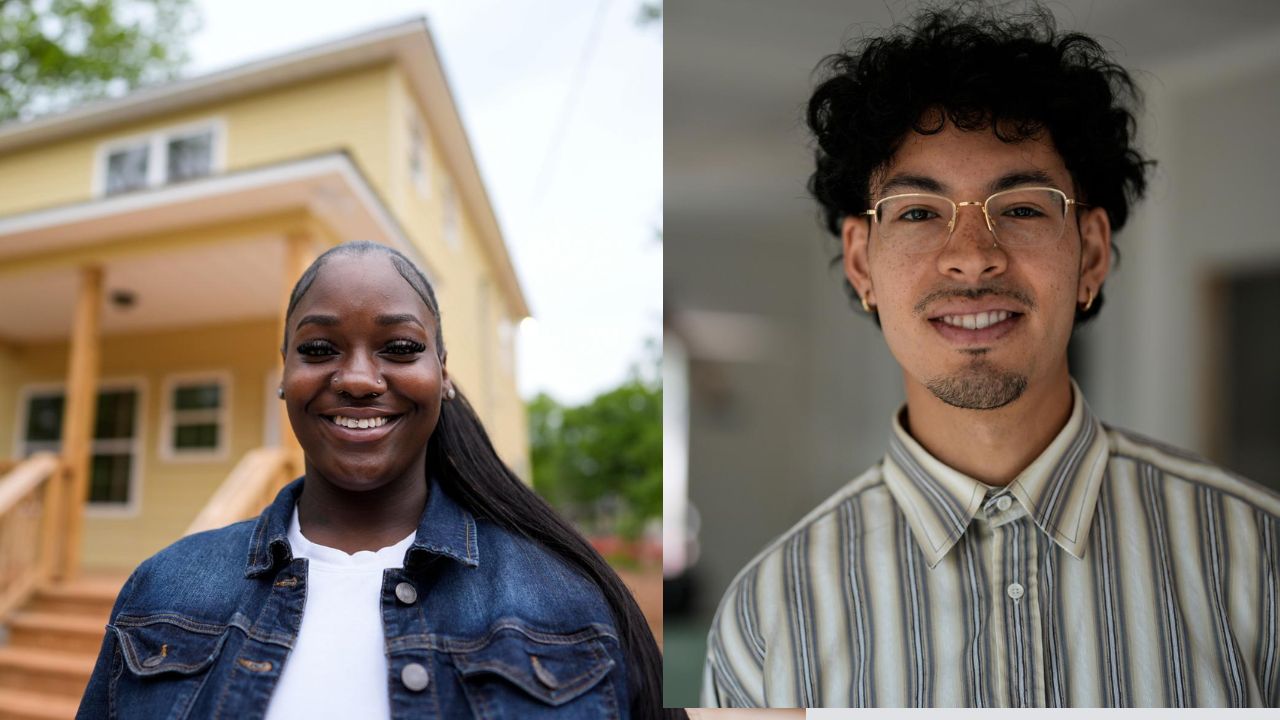
Homes in Atlanta: Two years after his death, President Jimmy Carter is still inspiring Habitat for Humanity’s efforts to build more affordable housing in the U.S. Over five days in May, nearly 1,000 volunteers with the international nonprofit will finish building 24 new housing units in Atlanta
Ozzy Herrera walked through the frame of what will soon be his home, and for a moment, he just let himself dream. A brown leather sofa. Terra-cotta walls. Maybe a bar cart near the kitchen.
At 27, working two jobs at Atlanta’s airport, Herrera never thought homeownership was something that would happen to him — not this soon, maybe not ever.
“It’s special. It’s magical,” he said.
This May, nearly 1,000 volunteers with Habitat for Humanity will turn that dream into a reality — not just for Herrera, but for 23 other families in Atlanta’s Sylvan Hills neighborhood, as part of the 40th Carter Work Project.
Named after former President Jimmy Carter and his late wife Rosalynn, these intensive weeklong building efforts have quietly changed lives across 14 countries since 1984 — roughly 5,000 homes worth of change. Atlanta hasn’t seen one since 1988, when the Carters themselves helped put up 21 homes in another part of the city. Now it’s back.
Habitat Is Thinking Bigger
But this isn’t just a feel-good construction project. It marks something of a turning point for Habitat for Humanity, which is celebrating its 50th anniversary this year while facing one of the most serious affordable housing crises in modern memory.
“The gap between what a family can afford and what it costs to create that unit of housing is the widest it has been in modern history,” said Jonathan Reckford, CEO of the international organization.
To meet that challenge, Habitat is stepping into a role it hasn’t traditionally played — real estate developer. Many smaller developers never fully recovered from the financial battering of the COVID-19 pandemic. Some have closed entirely. Rather than wait for the private sector to fill the gap, Habitat is filling it themselves.
In Sylvan Hills, that means 8 acres of land Habitat purchased back in 2015 — a former saw-blade manufacturing site that they worked to get rezoned for residential use. The result is Langston Park: 24 homes, a mix of single-family houses and townhomes, and the first time Atlanta Habitat has built multifamily units. Eventually, they hope to add 40 more homes to the site.
Each home costs around $200,000 to build. New owners pay a monthly mortgage tied to their income, with no interest charged. It’s not charity — it’s a ladder.
More Than Four Walls
Phileena Daniel knows exactly what that ladder means. She’s 27, raising a 7-year-old son, and the past two years of her life have been a lesson in how fragile housing can be. She and her son have lived through a unit infested with rats and roaches. Stability felt like something other people had.
Now she’s one of the Langston Park homeowners.
“You know, sometimes we don’t see ourselves going far in life as young Black women in this society,” she said. “This is giving us an opportunity to expand.”
Experts Are Taking Notice
Habitat’s evolution into community development isn’t going unnoticed in academic circles either. Vincent Reina, an urban economics and planning professor at the University of Pennsylvania and founder of the Housing Initiative at Penn, called it a textbook example of a nonprofit rising to meet real community need.
“They can still be true to their core mission — advancing homeownership — but they are also acknowledging that we need a diverse set of housing solutions to really meet the needs of individuals,” he said.
The numbers back up why this matters. Research by Reina and Wharton finance professor Benjamin J. Keys found that with home prices soaring and 30-year mortgage rates above 7%, even moderate-income households are effectively priced out in nearly all of the 98 most expensive metro areas in the country.
What’s Happening in Washington
On the policy front, Congress has been moving — though slowly. Both the House and the Senate have passed their own versions of affordable housing bills, and lawmakers are now working to reconcile the differences before sending a final version to President Trump.
Trump has signed executive orders aimed at cutting housing regulatory burdens and making it easier for smaller banks to offer mortgages. His proposed 2027 budget, however, tells a different story — it seeks significant cuts to the Department of Housing and Urban Development and would eliminate several community development programs that cities currently rely on to build affordable housing.
For families like Ozzy Herrera’s and Phileena Daniel’s, the policy debates in Washington feel distant. What’s real is the frame of a house, the smell of fresh lumber, and the quiet, extraordinary weight of having a place to call home.