


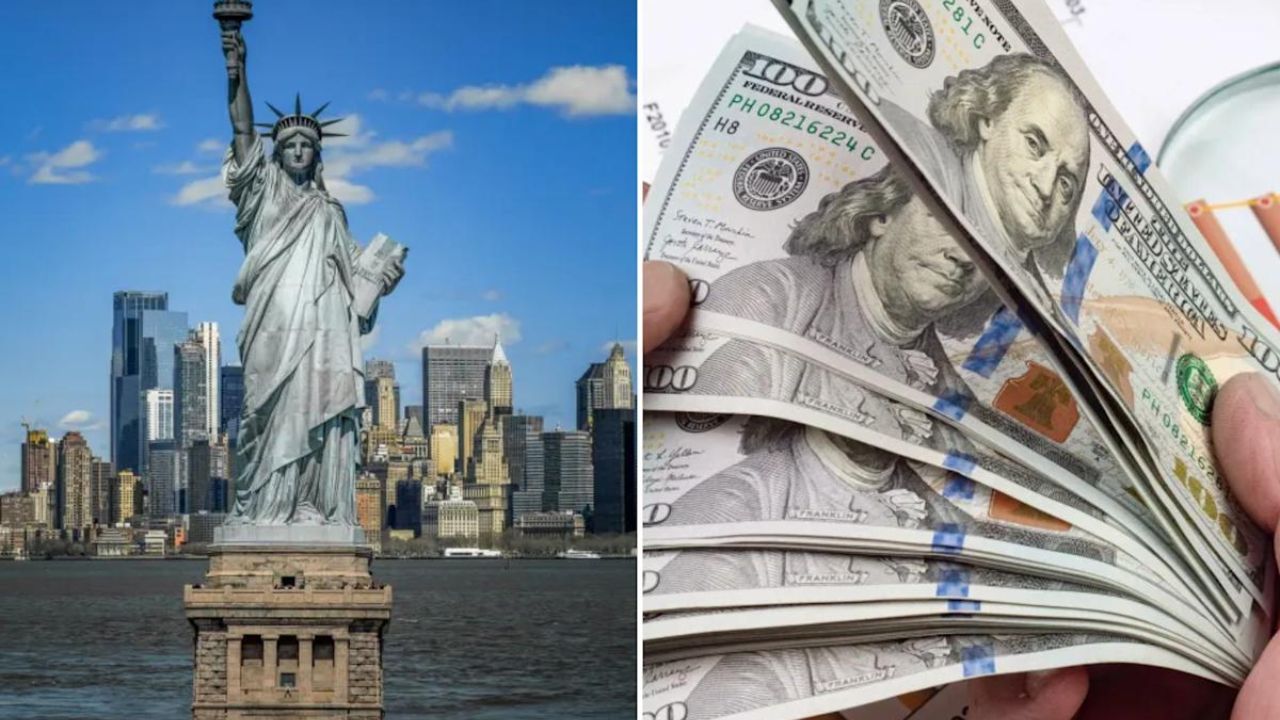
Global saving imbalances are widening fast. Here is what the U.S. deficit, China’s surplus, and weak political will mean for the world economy in 2026.
There was a time not so long ago when global saving imbalances kept economists awake at night. In the years leading up to the 2008 financial crisis, a torrent of surplus savings from China, Japan, and the oil-rich Gulf states flowed into American financial markets, helping to push interest rates to historic lows and fuel the reckless lending that ultimately ended in catastrophe. After the crash, those imbalances narrowed, and the sense of alarm faded with them. Today, the imbalances are back — and they are widening fast.
Since 2018, the sum of current account surpluses and deficits globally has climbed to its highest level since 2012, according to recent analysis. While those imbalances remain below the staggering peaks of the mid-2000s, their renewed growth has pushed the issue back to the top of the policy agenda — at the G7, at the International Monetary Fund, and among economists who study the plumbing of the global financial system.
The question at the heart of the debate sounds simple enough: does it matter if one country saves more than it spends and another spends more than it saves? The answer, it turns out, depends enormously on the circumstances — and on who you ask.
What Saving Imbalances Actually Are
A current account deficit, in the most basic terms, means a country is importing more than it exports and drawing on the savings of others to fund the difference. For the United States, that deficit reflects a persistent gap between what Americans spend and what they earn — driven by low private savings, a chronically large federal budget deficit, and the unique role the dollar plays as the world’s reserve currency.
On the other side of the ledger sits China. Its surplus, which grew from 1.4 percent of GDP in 2023 to an estimated 3.3 percent in 2025, reflects the flip side of that dynamic: weak domestic demand, a household sector that saves heavily, and an export machine that keeps cranking out goods even as profit margins thin. Both conditions reinforce each other. The United States absorbs China’s excess output; China absorbs America’s excess spending. For years, the arrangement was uncomfortable but stable.
The difference between a persistent trade deficit and a balance-of-payments crisis is similar to suffering from chronically high cholesterol versus having a heart attack.”
What has changed is the scale, the speed of the widening, and the political temperature surrounding it. The Trump administration’s aggressive tariff agenda — framed as a remedy for the trade deficit — has renewed attention to whether trade policy can actually fix a savings problem. Most economists say it cannot. The trade deficit is, at its core, a macroeconomic phenomenon. It is the mirror image of capital flowing into the United States, and as long as foreign investors find American assets attractive, capital will flow in and the deficit will persist.
What has changed is the scale, the speed of the widening, and the political temperature surrounding it. The Trump administration’s aggressive tariff agenda — framed as a remedy for the trade deficit — has renewed attention to whether trade policy can actually fix a savings problem. Most economists say it cannot. The trade deficit is, at its core, a macroeconomic phenomenon. It is the mirror image of capital flowing into the United States, and as long as foreign investors find American assets attractive, capital will flow in and the deficit will persist.
Why the IMF and Others Are Worried
The concern among international financial institutions runs deeper than the headline numbers. A recent IMF working paper laid out the mechanism with care: large, persistent current account deficits accumulate as external liabilities on a country’s balance sheet. The United States already carries a substantial stock of those liabilities, and that stock is projected to grow. Meanwhile, global asset managers have increasingly concentrated exposures, equity valuations in U.S. markets remain stretched by historical standards, and the dollar has already depreciated by roughly six to seven percent in real effective terms since early 2025.
Analysts at the IMF and elsewhere now describe two broad paths forward. In the more hopeful version — sometimes called the benign adjustment scenario — asset prices drift lower gradually, risk premiums rise at a measured pace, and the dollar continues to fall in a way that slowly corrects the external accounts through both trade and valuation effects. In this version, the adjustment is painful but manageable.
The alternative is considerably less pleasant. A sudden loss of confidence in U.S. fiscal sustainability, a sharp correction in equity markets, or stress spreading through less-regulated corners of the financial system such as private credit could trigger a rapid and disorderly unwinding. That kind of adjustment, historically, tends to take everyone by surprise.
The China Question
China’s role in the imbalance story is not straightforward, and the country’s economists tend to push back hard on the conventional framing. The IMF’s standard prescription — that China should shift away from export- and investment-led growth toward household consumption, strengthen social safety nets, and reduce precautionary savings — is logical in theory. In practice, Chinese researchers argue that the country’s high savings rate is not simply a policy failure but reflects deeply rooted cultural preferences for long-term financial security, and that reducing those savings too aggressively could undermine the country’s capacity to fund green investment and future growth.
What is harder to dispute is that China’s export capacity has grown enormously in recent years, that its industries are increasingly competing directly with those in advanced economies, and that the resulting surplus must be absorbed somewhere. For Germany and other manufacturing-heavy European economies, that somewhere is increasingly their own factory floors. For developing countries, Chinese competition makes export-led industrialization harder, even as cheap Chinese capital goods can support domestic investment.
Do Tariffs Actually Help?
Much of the current political energy in Washington is focused on tariffs as the solution of choice. The logic, as articulated by the administration, is that taxing imports will reduce the trade deficit by making foreign goods more expensive and encouraging Americans to buy domestic alternatives. The problem, economists note, is that a trade deficit is not primarily a problem of prices. It is a problem of savings and investment.
Recent IMF analysis found that tariffs are, on average, a weak tool for addressing rising current account deficits. The reason comes back to the basic identity: a country that imports more capital than it exports will run a trade deficit. Putting tariffs on washing machines does not change the fact that American households save too little or that the federal government spends far more than it collects in taxes.
Indeed, there is a dark irony in the current situation. The One Big Beautiful Bill Act, passed in mid-2025, is projected to add roughly $4.7 trillion to federal deficits over the next decade. Tariff revenue, according to the Congressional Budget Office, offsets only a fraction of that. The net effect of those fiscal choices is a wider saving deficit, which means a wider trade deficit — precisely the opposite of the stated goal.
What Would Actually Help
The policy prescription that most international economists converge on is not particularly new, nor is it popular with the governments that would have to implement it. The United States would need to raise its national saving rate, primarily by reducing its structural fiscal deficit. China would need to rebalance its economy toward household consumption by building out social safety nets, boosting disposable incomes, and moving away from investment- and export-led growth. Europe would need to increase investment, particularly in infrastructure, defense, and the transition to cleaner energy.
None of these adjustments is easy, and none is guaranteed to happen in an orderly way. The political economy points in the opposite direction. American voters have not demonstrated a sustained appetite for fiscal consolidation. China’s leadership has set ambitious industrial targets that point toward more production, not less. And Europe’s own divisions make coordinated investment difficult.
That is, in the end, why the debate about global saving imbalances feels so durable. The risks are real and reasonably well understood. The remedies are clear and largely agreed upon. What is missing, as it has been for the better part of two decades, is the political will to pursue them before something goes wrong.
Protectionism and tariff barriers will do nothing to resolve the U.S. savings deficit that is behind the country’s trade imbalance. Americans are, quite simply, living beyond their means.”
A Lesson From History Worth Heeding
History offers a cautionary note that those monitoring the current situation find difficult to ignore. The lesson from past episodes of large global imbalances is that they do not unwind gently. The savings glut of the mid-2000s did not produce a quiet repricing of risk. It produced the worst financial crisis since the Great Depression. The eurozone imbalances of the same period did not correct through gradual adjustment. They ended in a sovereign debt crisis that nearly broke the currency union apart.
That does not mean the current moment will inevitably end in disaster. The dollar’s reserve currency status gives the United States a degree of protection that few other countries possess. International institutions are better prepared than they were in 2008. And some adjustment is already underway, with the dollar’s depreciation nudging the trade balance in a more sustainable direction.
But the lesson of history is also that crises rarely announce themselves in advance. The most dangerous imbalances are the ones that look manageable right up until the moment they are not. For that reason alone, how important global saving imbalances are is a question worth taking seriously — long before anyone is forced to find out the hard way.