


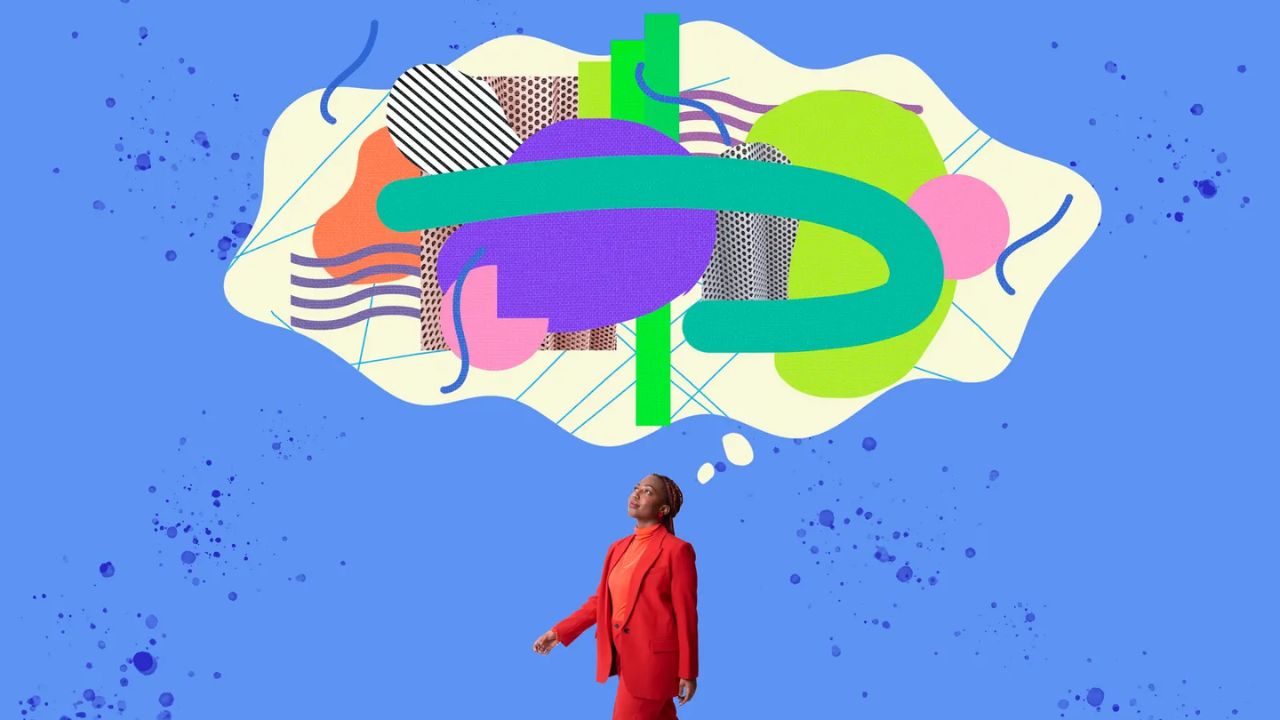
Highly intelligent people tend to daydream and talk to themselves — two habits science now links to creativity, self-regulation, and deeper cognitive processing.
There is a version of intelligence most people picture when they close their eyes. It is sharp, focused, quiet. A person who listens carefully, responds quickly, and never seems to drift. It is the kind of mind we were rewarded for in school and praised for at work. But according to psychologist Mark Travers, that picture is incomplete — and in some cases, it gets things exactly backward.
In recent work published through Psychology Today and Forbes, Travers argues that two of the most widely criticized cognitive habits are, under the right circumstances, consistent markers of a sharper, more capable mind. People dismiss them as flaws. The research, he says, suggests something more interesting is going on.
Daydreaming: Highly Intelligent People
Few habits draw more eye-rolls in a classroom or a boardroom than a wandering mind. The person staring out the window while a meeting proceeds around them does not look sharp. They look absent. And in a culture that equates productivity with constant engagement, that appearance carries a real social cost.
But neuroscience has been quietly revising that judgment. Travers points to a large 2025 study involving more than 1,300 adults that found deliberate mind-wandering — meaning a person intentionally allowing their attention to drift — predicted meaningfully higher creative performance. Neuroimaging data from the same study revealed increased connectivity between the brain’s executive control networks and its default mode network, the system associated with imagination, self-generated thought, and long-range planning.
When we idealize focus, discipline, and a silent mind, we overlook the powers of the human brain beyond sheer concentration.
The distinction Travers draws is a careful one. He is not describing the passive, anxious rumination that traps people in loops of worry or regret. He is describing something different: mental simulation. Where rumination is repetitive and stuck, simulation is exploratory. It shifts perspective, tests new assumptions, and tends to generate insight rather than merely recycling distress. The two can look identical from the outside — a person who seems distracted, eyes glazed, thoughts elsewhere — but the cognitive content is entirely different.
People with higher spontaneous mind-wandering tendencies also performed better on task-switching tests, indicating they can shift between mental contexts more fluidly. A separate 2024 study published in PNAS Nexus, which analyzed unprompted thought samples from more than 3,300 participants, found that spontaneous thinking tends to organize around goal-relevant information and supports memory consolidation. In other words, when the mind wanders, it is frequently working on something — something it does not announce, but does not ignore either.
The important caveat, which Travers is careful to include, is that none of this means chronic distraction is a feature rather than a bug. The benefits of mind-wandering only hold when paired with a genuine capacity for focused attention. The person who can drift and return, by choice, has a cognitive asset. The person who simply cannot hold their attention has a different problem entirely.
Talking to Yourself
The second habit is one most people learn to hide by adulthood. Talking to yourself — whether under your breath in the grocery store, silently narrating a task, or quietly working through a problem out loud — carries a strong social stigma. It reads as odd, a little unnerving, or at best eccentric. People who do it openly often apologize for it unprompted.
The psychology behind it, however, is considerably less embarrassing than its reputation. Inner speech, Travers explains, functions as a cognitive scaffold. When the brain externalizes a thought, even just internally, it imposes a kind of structure on abstract or emotionally tangled problems that pure silent reflection often cannot. The act of forming language around a thought forces organization. It sequences a plan, names a feeling, or draws a boundary around a problem that was previously too diffuse to examine clearly.
A 2023 study of university students, published in the journal Behavioral Sciences, found a notable correlation between reported use of inner speech and both self-regulation and self-concept clarity. Students who talked to themselves more frequently reported significantly clearer senses of their own identity, as well as stronger capacity to regulate their own behavior — two traits that tend to predict performance across a wide range of demanding cognitive and social tasks.
Travers is deliberate about what this does and does not mean. Inner speech does not directly indicate higher raw intelligence in the way fluid reasoning tests do. But it does suggest that a person’s mind is engaging in metacognition — thinking about its own thinking — which is consistently linked to better judgment, more adaptive learning, and stronger self-awareness. A brain that talks to itself is, in a meaningful sense, a brain that is paying attention to itself.
The flip side, again, is context-dependent. Self-talk that spirals into harsh self-criticism or anxious rumination can undermine focus and emotional wellbeing just as readily as it supports planning. The constructive version — the kind Travers is describing — is purposeful, forward-looking, and used as a tool rather than a symptom.
Why We Misread These Habits in the First Place
Travers locates the root of the misreading in a cultural bias toward a particular kind of performance. Western professional and educational environments tend to reward quick responses, decisive opinions, and visible engagement. A student who answers immediately looks smart. A colleague who never seems distracted looks disciplined. The habits valued are the ones that signal effort in ways other people can observe.
Daydreaming and self-talk, by contrast, are invisible processes. Their outputs — a creative insight reached after a long mental walk, a decision that was narrated into clarity in the shower — are not traceable to their origins. They look, from the outside, like nothing happened. And so the processes that produced them get coded as problems rather than methods.
The broader argument Travers is making is that intelligence does not always look like intelligence. A mind that is preparing rather than stalling, that is scaffolding rather than spacing out, can be mistaken at every step for its opposite. The observable surface of behavior and the cognitive reality beneath it are not always the same thing. Understanding that gap — and extending some patience toward the habits that live in it — is, perhaps, its own kind of wisdom.
Three Steps to Use These Habits Adaptively
For people who recognize these habits in themselves and want to channel them more deliberately, Travers offers a practical framework grounded in the research.
1. Notice when and where it happens
Pay attention to the conditions under which your mind tends to wander or your inner voice kicks in. Do you daydream most during monotonous tasks? Do you self-talk when something is complex or stressful? Identifying the pattern helps you work with it rather than against it. Try giving yourself a deliberate 10-minute idle period before returning to a difficult problem.
2. Use your inner voice consciously
When planning or working through a layered decision, speak to yourself as if you are guiding someone through a process. The act of forming coherent inner sentences around a problem imposes the kind of structure that clarifies it. Think of it as narrating your way into understanding rather than simply thinking in circles.
3. Schedule deliberate mental rest
The research is clear that mind-wandering yields its benefits when paired with genuine focused effort, not as a replacement for it. Build micro-breaks for open, unstructured reflection into your day. A short walk without a podcast, five minutes of looking out a window with nothing to finish — these are not wasted time. They are, the science suggests, exactly when some of the most useful thinking happens.
The next time someone catches themselves staring out the window in the middle of a difficult task, or muttering through a problem that will not resolve, the instinct may be to snap back and refocus. But it is worth pausing first to ask what the brain is actually doing. It may be doing rather more than it looks.