


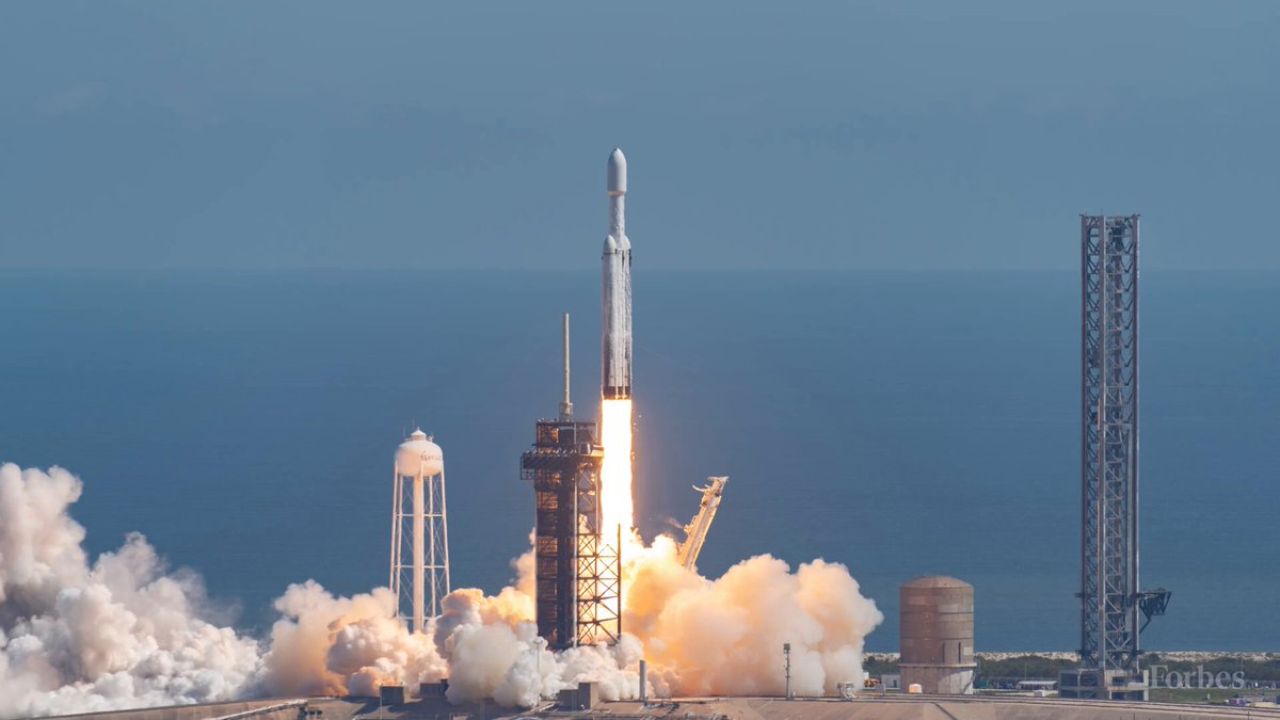
SpaceX IPO 2026 targets a $1.75 trillion valuation in June 2026 — and Tesla investors may feel the heat. Here is what the historic listing really means for your portfolio.
For years, Wall Street treated Elon Musk’s two most consequential companies as a package deal. Tesla was the publicly traded window into his ambitions — the stock investors bought when they wanted exposure to Musk’s vision of a technology-driven future. SpaceX stayed private, its breathtaking growth locked behind investor relations that only a select few could access. That arrangement is about to end, and when it does, the dynamics that have long propped up Tesla’s valuation may face a reckoning.
SpaceX confidentially filed its draft registration statement with the Securities and Exchange Commission on April 1, 2026, officially setting the stage for what analysts across Wall Street are calling a once-in-a-generation listing. The company is reportedly targeting a valuation of $1.75 trillion — a figure that would make it one of the most valuable corporations ever to debut on a public exchange.
By comparison, Tesla’s current market capitalization sits at roughly $1.4 trillion. The company that Musk built into a symbol of American electric vehicle ambition could, within months, find itself the smaller of two publicly traded Musk enterprises — outpaced not by a rival automaker, but by a rocket company that operates satellites from low Earth orbit.
“When SpaceX eventually lists, Musk will become the first person to helm two separate trillion-dollar publicly traded companies simultaneously.”
A Rocket Company That Became a Telecom Giant
To understand why SpaceX commands such an extraordinary valuation, you have to understand Starlink. What started as an audacious side project — blanketing the Earth in satellites to deliver broadband internet to remote corners of the world — has become the financial backbone of the entire company. In 2025, Starlink generated $11.4 billion in revenue, growing at roughly 50 percent year over year, with an EBITDA margin that approached 63 percent. That kind of profitability is typically the domain of mature software businesses, not satellite infrastructure.
As of early 2026, Starlink surpassed 10 million active subscribers globally, doubling its subscriber base year on year. The constellation now includes nearly 10,300 active satellites in low Earth orbit — roughly 65 percent of all active satellites circling the planet. For 2026, analysts project Starlink revenue to exceed $20 billion, driven by continued subscriber growth, enterprise contracts, and a direct-to-cell service that could eventually extend Starlink coverage to every mobile device without a separate receiver.
SpaceX IPO 2026: Tesla’s Difficult Year
The backdrop against which SpaceX plans to go public matters enormously. Tesla has spent most of 2026 on the defensive. Shares have fallen roughly 22 percent year to date, sitting approximately 30 percent below their 52-week highs. The company missed delivery expectations in the first quarter, a result that compounded already-existing anxieties about slowing electric vehicle demand and intensifying competition from Chinese automakers.
For years, Tesla’s valuation relied on a premium that went beyond its car sales — a “Musk premium” that investors paid because they believed his involvement guaranteed continued innovation and growth. That premium has been quietly deflating. And when SpaceX arrives on the public market with a higher valuation, stronger profit margins in its core Starlink segment, and a growth trajectory that Tesla’s automotive business cannot currently match, the case for that premium becomes considerably harder to make.
Analysts at Motley Fool were direct in their assessment: frustrated Tesla investors may ditch the stock once SpaceX offers them a more direct path to Musk’s most dynamic operation. The psychology of retail investing is not entirely rational, but it does follow a certain logic — and the logic of switching from a struggling automaker to the world’s dominant satellite operator, under the same founder, is not difficult to follow.
“The SpaceX IPO could give investors even more incentive to sell Tesla shares. With Tesla’s high valuation, there’s significant downside risk to its stock.”
The Retail Investor Play
One of the most unusual features of SpaceX’s planned offering is its reported commitment to allocating up to 30 percent of IPO shares to retail investors — approximately triple the typical Wall Street standard. If that commitment holds, it would be one of the most significant democratizations of a major technology listing in recent memory, directly inviting the same passionate individual investors who fueled Tesla’s rise to participate from day one.
This creates an interesting dynamic. Tesla’s retail base — loyal, ideologically committed to Musk’s mission, and emotionally invested in the broader ecosystem — suddenly has a choice. They can hold their Tesla stock, accept its present struggles, and wait for a recovery that is not obviously around the corner. Or they can direct fresh capital toward an IPO with a growth story that, on paper, is far more compelling right now. The two positions are not mutually exclusive, but in a world of finite capital, allocations get made.
The xAI Merger and What Came Next
The SpaceX story grew considerably more complex in February 2026, when the company completed its merger with xAI, Musk’s artificial intelligence venture. The deal was structured as an all-stock transaction, valuing SpaceX at $1 trillion and xAI at $250 billion, with xAI shareholders receiving SpaceX equity in exchange. xAI now operates as a SpaceX subsidiary, and its financials — including ongoing operating losses — have been consolidated into SpaceX’s accounts.
The consequence of that consolidation is that SpaceX’s headline financials look somewhat different today than they did before the merger. Reuters’ review of the S-1 filing reported $18.7 billion in 2025 consolidated revenue alongside a $4.9 billion overall loss, a figure heavily influenced by xAI’s $6.4 billion operating loss. Before the merger, earlier reports had suggested SpaceX’s standalone operations generated roughly $8 billion in profit on $15 to $16 billion in revenue.
The bull case, advanced most prominently by ARK Invest — which holds SpaceX as its largest Venture Fund position at 17 percent of net assets — rests on what the firm calls the “orbital intelligence” thesis. If Starship’s launch costs eventually fall below $100 per kilogram to orbit, running data centers from space could deliver computing power roughly 25 percent more cheaply than ground-based alternatives, without the permitting friction, land constraints, or power grid delays that have bedeviled terrestrial AI infrastructure. Musk has stated a goal of deploying 100 gigawatts of AI computing capacity per year from orbit.
The Risks That Come With the Hype
Not every analyst is convinced the euphoria is fully warranted. At the targeted $1.75 trillion valuation, SpaceX would be priced at roughly 109 times its 2025 revenue — a multiple that significantly exceeds the comparable figures for Tesla, Palantir, and virtually every other high-growth public technology company. Rich Smith at Motley Fool noted plainly that when this IPO happens, it will likely happen at a valuation that is difficult to defend on purely conventional financial terms.
There are competitive pressures that public investors will need to price in as well. Amazon’s Project Kuiper has launched more than 1,500 satellites and must reach 1,618 deployed satellites by July 2026 or risk losing its FCC spectrum authorization. As Kuiper matures, enterprise procurement decision-makers evaluating satellite connectivity contracts will have a credible alternative to Starlink for the first time. That competitive dynamic could compress Starlink’s pricing power at precisely the moment SpaceX needs to demonstrate the kind of margin expansion that public markets demand.
There are also governance questions that did not exist when SpaceX was private. Musk simultaneously leads SpaceX, Tesla, and xAI — and his time and attention are finite. Institutional investors running ESG screens and governance frameworks will scrutinize that arrangement in ways that private investors never had to. A dual-class share structure, which SpaceX is expected to employ, will limit the ability of new shareholders to influence company direction, a feature that tends to draw skepticism from governance-focused funds.
The Merger Speculation That Won’t Go Away
Wedbush analyst Dan Ives, who rates five stars on TipRanks, has suggested that a Tesla-SpaceX merger as early as 2027 could represent what he calls the “holy grail” scenario — combining both companies under a single AI-driven ecosystem. Tesla has already received government approval to convert its $2 billion investment in xAI into a small stake in SpaceX, creating a financial link between the two companies ahead of the IPO. Once SpaceX lists, Tesla’s stake will be valued publicly for the first time, which could itself influence how investors think about Tesla’s underlying asset value.
Whether a merger ever materializes is speculative. But the very fact that it is being discussed openly by prominent analysts tells you something important about the moment the market is in: SpaceX’s arrival on public exchanges is not just a liquidity event for early investors. It is a structural shift in how Elon Musk’s empire is organized, how investors access it, and — for Tesla shareholders specifically — whether the bet they have been making for years still makes sense in quite the same form.
What comes next will matter to more than just SpaceX employees and venture capitalists counting their paper gains. When the roadshow begins in June, and the book builds, and retail investors line up for what SpaceX is promising will be a uniquely accessible offering, Tesla’s stock will be trading in the shadow of a competitor that is, by almost every growth metric, outrunning it. The cars are still selling. The Supercharger network is still growing. But the narrative — the story of what Musk’s most important company is — may be changing lanes.