


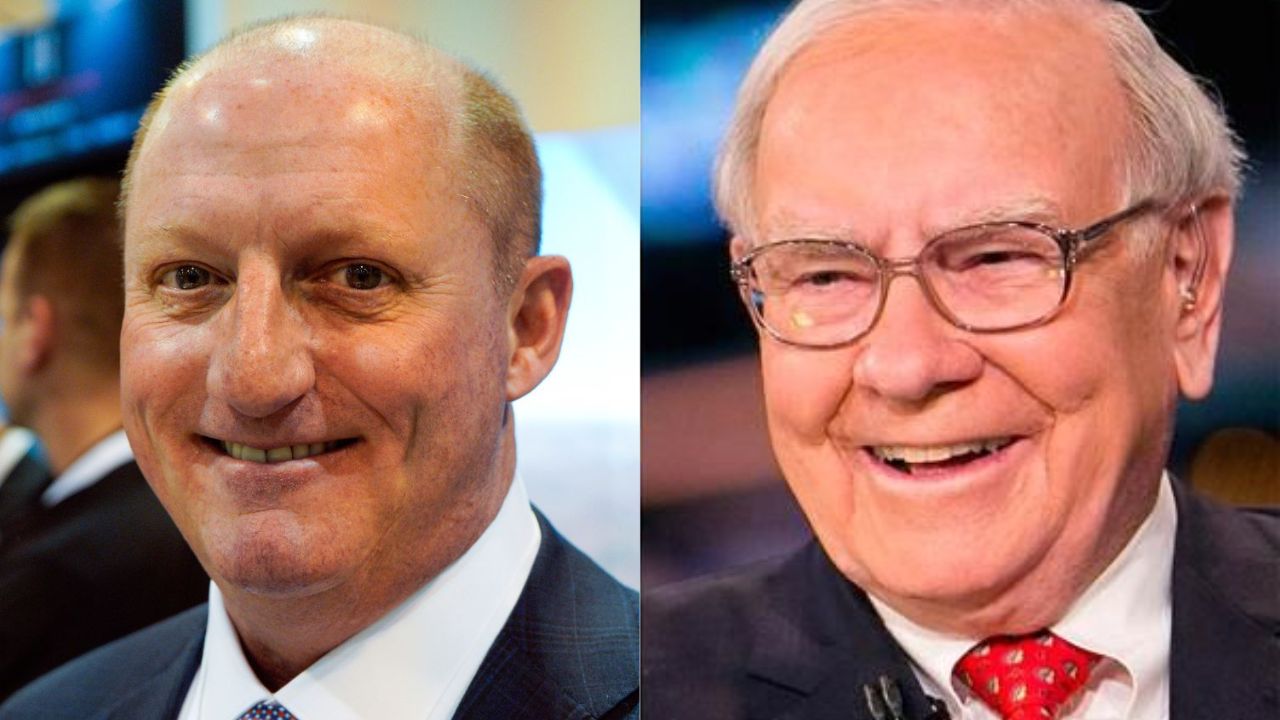
Warren Buffett: Every year, tens of thousands of people make a pilgrimage to Omaha, Nebraska — a mid-sized Midwestern city that, by most measures, shouldn’t draw this kind of crowd. They come for the discount shopping, the 5K run, and the chance to sit in an arena with like-minded people who believe, genuinely and deeply, in one man’s vision of how money and business should work.
This year, they’ll find most of it intact. Except the most important part.
Warren Buffett won’t be on stage.
For the first time in 60 years, the annual Berkshire Hathaway shareholder meeting will be led by someone else. Greg Abel, the quiet and capable executive who took over as CEO last year, will field questions, guide discussions, and carry the weight of a $1 trillion company on his shoulders — all while the 94-year-old legend he’s replacing sits somewhere in the audience, listening.
It’s a passing of the torch unlike anything corporate America has seen in a generation.
A City Defined by One Man
To understand what this transition means, you have to understand what Buffett meant to Omaha — and what Omaha meant to Buffett.
“You say, ‘What do you know about Omaha,’ and the answer is ‘Warren Buffett,'” said Ernie Goss, a regional economist at Creighton University. “I can’t think of another city Omaha’s size that you can identify with one person.”
That bond has drawn visitors from every corner of the globe, year after year. Last year, nearly 30,000 people traveled more than 60 miles just to be in the same room as Buffett — and that figure doesn’t even count international visitors. Hotel rooms across the county were 95% booked. Dairy Queen sold out of ice cream bars. It was less a shareholder meeting and more a festival of faith.
This year, hotel reservations are down. International visitors fewer. And the quiet consensus among longtime attendees is that the crowd will keep shrinking. One longtime investor predicted attendance could fall by half within a couple of years.
“People came to hear Warren and Charlie,” said Steve Check of Check Capital Management, who has been attending for years. “They didn’t really come to hear about Berkshire.”
Big Shoes, Bigger Challenges
None of this is a knock on Greg Abel. By most accounts, he’s sharp, disciplined, and deeply committed to the culture Buffett spent decades building. Unlike his predecessor, Abel is known for being hands-on — less inclined to look the other way when a business underperforms. But he also inherits a company that is, by almost any measure, a genuine puzzle to run.
Consider the cash pile alone: Berkshire ended 2025 sitting on roughly $373 billion in cash. That’s not a war chest — it’s a small country’s GDP. Deploying it wisely, in a market where truly great deals are rare, may be the defining challenge of Abel’s tenure.
“A lot of Berkshire’s businesses have a great degree of predictability,” said Paul Lountzis, a longtime Berkshire investor attending his 34th annual meeting. “But with a $1 trillion market cap, it’s big, and that makes it much harder to grow.”
The numbers from 2025 weren’t exactly encouraging. Operating profit fell 6%, revenue barely moved, and Berkshire shares dropped 12% over the past year — even as the S&P 500 climbed 25%. The market, it seems, is still in a “show me” mood when it comes to Abel.
“Some investors may want to see Greg prove himself before they double down,” said Lawrence Cunningham, a governance professor who has written extensively about Berkshire. “I’m confident, but the market is expressing caution.”
A Meeting Reimagined
The format of Saturday’s meeting will feel different too. Abel will open with an hour-long discussion about Berkshire — a new feature — before spending two and a half hours taking shareholder questions, flanked by insurance chief Ajit Jain, BNSF chief Katie Farmer, and consumer businesses head Adam Johnson.
It’s a more structured, more corporate affair. Competent, no doubt. But it won’t be the same as watching Buffett and his late partner Charlie Munger hold court for five hours, trading wisdom and wit in a way that made people feel like they were eavesdropping on two of the smartest, most grounded people alive. Munger died in 2023, and with Buffett stepping back, an era that felt timeless has quietly closed.
The Empire Endures
What remains is still extraordinary. Berkshire owns dozens of businesses that touch everyday American life — Geico insures your car, BNSF moves freight across the country, Dairy Queen sells you a Blizzard, Fruit of the Loom clothes your kids, and Pilot keeps long-haul truckers fuelled up. In January, it added Occidental Petroleum’s chemicals business for $9.5 billion. The machine Buffett built is humming, even if it’s growing more slowly than investors would like.
And as long as Buffett remains chairman, Berkshire retains something money can’t easily replicate: the credibility to step in as a lender of last resort when the world is falling apart, just as it did when it quietly handed Goldman Sachs $5 billion during the darkest days of the 2008 financial crisis.
The pilgrims will still come to Omaha this weekend. They’ll eat the Dairy Queen bars and run the 5K and browse the booths. But there will be a different feeling in the arena this year — something between admiration for what’s being built and quiet mourning for what can’t be replaced.
Warren Buffett will be in the audience. For once, everyone else will be on stage.