


Bank of England Hold Sits Tight on Interest Rates Like US and Japan as Iran War Upends the Global Economy
The Bank of England has maintained its interest rate at 3.75% due to the ongoing Iran war, which has significantly impacted global energy and commodity prices. This decision aligns with the US Federal Reserve’s and Japan’s stance of keeping rates unchanged.
The Bank’s Monetary Policy Committee voted unanimously to hold the rate, reflecting the unpredictability of the economic situation in the Middle East and the potential for inflation to rise.
The Bank will continue to monitor the situation closely and adjust its policies as necessary to ensure inflation returns to the 2% target.
Nobody wanted to make a move. Not London. Not Washington. Not Tokyo. And later Thursday, almost certainly not Frankfurt either.
In a remarkable show of collective caution, the world’s most powerful central banks have spent this week doing the same thing: sitting on their hands and watching the Middle East burn.
The Bank of England kept its main interest rate unchanged at 3.75% on Thursday, following the U.S. Federal Reserve’s identical decision on Wednesday and the Bank of Japan’s a day before that. The message from all of them, unspoken but unmistakable, is the same: we don’t know how this ends, and we’re not going to pretend otherwise.
A War That Changed Everything
Just a few months ago, life looked considerably simpler for Bank of England policymakers. Inflation was easing, the economy was stabilising, and financial markets had quietly priced in rate cuts through the spring. For the first time in years, there was genuine optimism that the worst was behind us.
Then, on February 28th, the Iran war began.
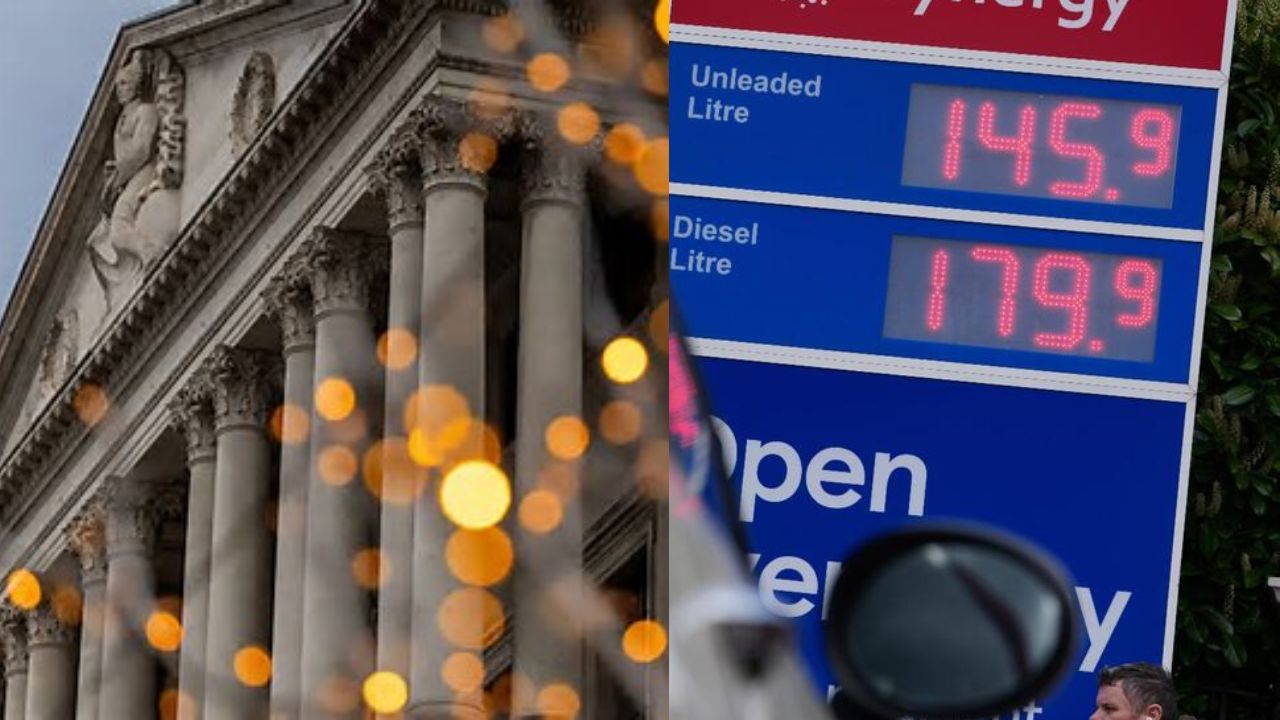
Everything changed almost overnight. Oil prices surged. Energy costs spiked. And when Tehran effectively closed the Strait of Hormuz — the narrow waterway through which roughly a fifth of the world’s crude oil passes every single day — the global economy held its breath.
It still hasn’t exhaled.
On Thursday, Brent crude briefly touched $126 a barrel, its highest level since the dark early days of Russia’s full-scale invasion of Ukraine. Traders are increasingly betting the Strait won’t reopen anytime soon, and every passing day that belief deepens, prices climb a little higher.
Eight Against One
Inside the Bank of England’s meeting room, the vote to hold rates was nearly unanimous — eight of the nine rate-setters agreed. One member pushed for a quarter-point hike, a lone signal that for some, the inflation threat is already serious enough to act on.
Bank Governor Andrew Bailey, walking a careful line, acknowledged the difficulty of the moment without pretending to have answers nobody has.
“We think this is a reasonable place given the situation of the economy and the unpredictability of events in the Middle East,” he said. “Whatever happens, our job is to make sure that inflation gets back to the 2% target after the initial impact of the war on energy prices has passed.”
In an almost unprecedented move, the Bank published not one forecast but a range of them — a quiet admission that the usual economic models are struggling to keep up with geopolitical reality. In the worst-case scenario, where oil and gas prices stay elevated for an extended period, UK inflation could surge from its current 3.3% all the way to 6.2%. That would mean multiple rate hikes, and a significantly heightened risk of recession.
Caught Between Fire and Ice
This is the nightmare scenario for any central bank: an economy simultaneously threatened by both rising prices and a slowdown. Raise rates to fight inflation, and you risk tipping a fragile economy into recession. Keep rates on hold, and inflation could spiral further.
Luke Bartholomew, deputy chief economist at Aberdeen, believes the recessionary pressures will ultimately contain inflation from spreading too deeply into wages and wider costs. But he’s not willing to rule out hikes entirely.
“If oil prices continue to move higher,” he said, “it is hard to see how the Bank avoids having to hike later this year.”
Politics Meets Economics
For UK Treasury chief Rachel Reeves, the crisis has been a brutal interruption. Her carefully laid plans on the cost-of-living — already a politically charged issue — have been thrown into disarray by a conflict thousands of miles away.
She has promised support for households and businesses if and when it’s needed, striking a tone that is equal parts resolve and realism.
“The war in the Middle East is not our war,” she said, “but it is one we have to respond to.”
It’s a sentence that captures the peculiar helplessness of this moment — the way a conflict in one part of the world can quietly reach into the pockets of ordinary people in another, raising their energy bills, their grocery costs, and the quiet anxiety that comes with not knowing what comes next.
For now, the Bank of England waits. The Fed waits. The ECB waits. The entire global financial system is in a kind of suspended animation, watching oil tankers that aren’t moving through a strait that isn’t open, trying to calculate the cost of a war nobody planned for.
The next move — in rates, in the conflict, in oil prices — could come any day. Until then, the world’s central bankers are doing what the rest of us are doing: watching, waiting, and hoping.