Best mid-sized electric cars of 2026 ranked — we drove them all back-to-back and scored every one. Find out which EV truly deserves your money right now.
There has never been a better time to buy a mid-sized electric car. That sounds like something a press release would say, but in this case it happens to be true. Two or three years ago, this segment was thin on the ground and short on inspiration. Today, it is the most hotly contested battleground in the entire automotive market, with established brands and newer names all fighting for the same pool of buyers who want something practical, affordable to run, and enjoyable to drive every single day.
The challenge for anyone trying to choose is that many of these cars are genuinely good. The differences that matter most are subtle — how the car feels after three hours on the highway, whether the infotainment actually makes sense in the rain with gloves on, how the range holds up when the temperature drops in February. We spent several weeks driving all of them in real-world conditions to cut through the spec-sheet noise and give you a ranking you can actually trust.
What follows is our definitive list, from the car we would leave in the lot to the one we would buy without hesitation. We have scored each on range, everyday usability, driving dynamics, interior quality, and value. Here is where every one of them stands.
7. Jeep Avenger Electric
- 150mi = Est. Range
- 156hp = Power
- 54kWh = Battery
- $37,000 = From
The Jeep Avenger is not a bad car. It is, however, a car that asks you to pay a significant premium for a badge and a brand story while delivering a product that its cheaper rivals consistently outperform on almost every measurable metric. The range is the first problem — real-world figures in mixed driving fall well short of what buyers in this segment now rightly expect as baseline. The interior feels like it was designed to a tight budget, and that budget shows in the plastics you touch most often.
Where the Avenger does earn some credit is in character. It has genuine personality, a compact footprint that makes urban driving genuinely easy, and the Jeep branding carries real emotional weight for a specific type of buyer. But charm alone does not justify the price differential over stronger competitors, and in back-to-back testing against this group, the Avenger spends most of its time trailing the pack.
6. Kia e-Niro
- 230mi = Est. Range
- 201hp = Power
- 64kWh = Battery
- $39,000 = From
The Kia e-Niro was a revelation when it first appeared. Generous range, sensible packaging, reliable Kia build quality, and a five-year warranty that made early EV anxiety feel manageable. The problem is that the car was a revelation several years ago, and the rest of the market has caught up — and in several cases, moved ahead.
More EV News
In everyday use, the e-Niro remains a competent and comfortable companion. The ride quality is decent, the infotainment is logical if not inspiring, and the back seat offers enough room for two adults without apology. But the charging speed is now firmly behind the class leaders, the interior feels dated next to newer rivals, and the driving experience lacks the engagement that some of this group deliver as standard. It is a fine car. It is just no longer a great one.
5. Smart
- 240mi = Est. Range
- 268hp = Power
- 66kWh = Battery
- $41,000 = From
Smart’s reinvention — now a joint venture with Geely, with design input from Mercedes — has produced one of the most visually interesting cars in this segment. The #1 draws attention everywhere it goes, and not just because of the name. The proportions are excellent, the detailing is genuinely premium, and the interior quality feels several notches above what the price would suggest.
The problems emerge in the details. The infotainment system is large and glossy but occasionally sluggish in a way that grates on daily use. Rear visibility is limited in ways that become a genuine inconvenience in parking lots. The ride quality is competent but lacks the suppleness of the class leaders. None of these are deal-breakers in isolation, but together they add up to a car that is more appealing on a forecourt than in a weekly commute.
4. Cupra Born
- 260mi = Est. Range
- 231hp = Power
- 77kWh = Battery
- $42,000 = From
The Cupra Born is the car in this group that a driving enthusiast would choose — and the fact that it sits at number seven rather than higher up the list tells you something important about what this ranking is actually measuring. The Born handles with a precision and eagerness that none of its immediate rivals can match. The steering has genuine weight and feedback. The chassis feels properly sorted. At the right pace on the right road, it is a genuinely enjoyable car to drive.
But a ranking of this kind has to account for the whole picture, and the Born’s practicality compromises are real. The cabin is snug, the cargo space is modest, and the charging network experience can be inconsistent depending on where you live. If you are buying this car primarily as a daily driver for a family of four, some of the higher-ranked alternatives will serve you better. If you are buying it because you enjoy driving, however, the Born deserves serious consideration regardless of its position here.
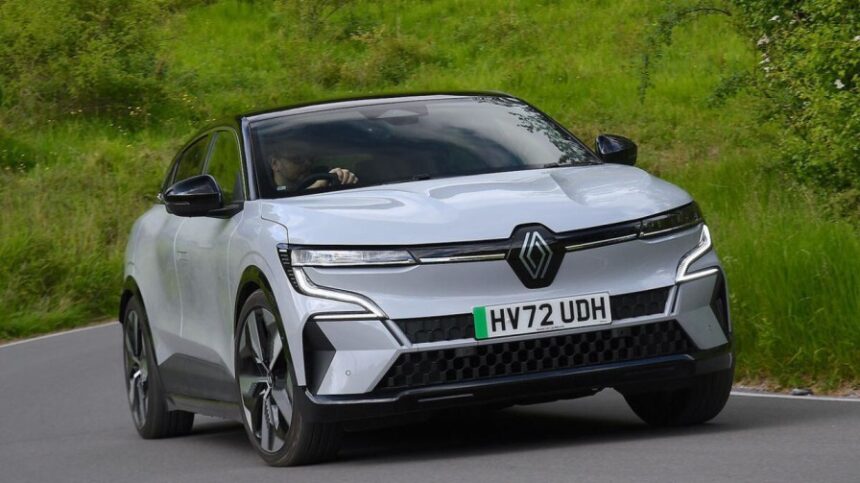
3. Renault Megane E-Tech Electric
- 250mi = Est. Range
- 217hp = Power
- 60kWh = Battery
- $38,000 = From
The Renault Megane E-Tech Electric arrived as a proper ground-up EV design rather than an adaptation of an existing platform, and the difference shows. The cabin is genuinely special — the horizontal dashboard layout, the quality of the materials, and the integration of the large portrait-format touchscreen with physical controls for the functions you actually use most often is a masterclass in how to design an EV interior without throwing every convention out the window at once.
The driving experience is refined and comfortable. Renault has clearly prioritized long-distance ease over outright engagement, which is the right call for the majority of buyers in this segment. Real-world range is respectable, and the 130kW DC charging speed puts recovery times firmly in the acceptable-for-a-long-journey category. It loses ground to the top five primarily on value — similarly specified rivals from MG and Volkswagen undercut it noticeably — but if interior design matters to you, the Megane is worth every cent of the premium.
2. Volkswagen ID.3
- 270mi = Est. Range
- 204hp = Power
- 77kWh = Battery
- $40,000 = From
Volkswagen spent the early years of the ID.3’s life fixing problems that should not have existed at launch. The good news is that those fixes are now in place, and the car that sits before us today is a genuinely accomplished mid-size EV that deserves to be taken seriously. The build quality is solid throughout, the infotainment has been substantially improved in successive software updates, and the fundamental driving experience — composed, quiet, comfortable — is very good indeed.
The ID.3’s trump card remains its packaging efficiency. Volkswagen’s MEB platform allows for rear-seat space and cargo capacity that would be remarkable in a petrol car of similar exterior dimensions, and practically unmatched in this electric group. If you need to carry four adults in genuine comfort, the ID.3 is one of very few cars in this price range that manages it without compromise. It sits at number five only because the cars above it are, in one way or another, better value.
The mid-size EV segment has matured faster than almost anyone predicted. The cars at the top of this list would have been extraordinary just three years ago. Today, they are simply the baseline.”
1. MG4 Electric
- 280mi = Est. Range
- 201hp = Power
- 77kWh = Battery
- $32,000 = From
The MG4 Electric’s position at the top of this ranking is not a story about a budget car punching above its weight. It is a story about a car that has been so comprehensively thought through — in its engineering, its packaging, its pricing, and its real-world behavior — that it makes competitors costing ten thousand dollars more feel like they are making excuses.
Start with the numbers, because they are genuinely remarkable. The long-range variant delivers real-world range that consistently meets its official figures in a way that many rivals cannot match. The 150kW DC charging speed means a 10-to-80-percent charge in under 30 minutes on compatible hardware. And the price, for a car with this specification, is low enough that the MG4 introduces a category of buyer to the EV market that was simply not being served before.
But numbers only tell part of the story. The MG4’s greatest achievement is how it drives. MG’s engineers chose rear-wheel drive as the default configuration — a decision that immediately separates it from front-drive rivals — and the result is a car that has a natural balance and a playful but controlled character on the road. It is not the Cupra Born for outright driver engagement, but it is meaningfully more entertaining than the Kia or the VW, and it does not cost you anything in everyday usability to achieve that.
Inside, the cabin is not the most luxurious in this group. The Renault Megane wins that contest. But everything works, the layout is logical, the seat comfort on long journeys is genuinely good, and the materials in the areas that matter most feel appropriate for the price. The rear seat is spacious. The cargo area is practical. The driving position is excellent. It is a car that the whole family can use every day without anyone feeling like they are making do.
The honest answer to the question of who should buy the MG4 is: most people. It will not satisfy a buyer who places brand prestige above all other considerations, and it will not win over the driving purist who wants the absolute limit of chassis feedback. But for the vast majority of buyers in this segment — people who want a reliable, efficient, genuinely enjoyable electric car that leaves money in their pocket for everything else life requires — the MG4 is not just the best choice here. It is one of the most sensible car purchases in any segment at any price point in 2026.
Full Comparison Table
| Rank | Car | Est. Range | Power | Starting Price | Score | |
|---|---|---|---|---|---|---|
| 1 | MG4 Electric | ~280 mi | 201 hp | ~$32,000 | 9.2 | Winner |
| 2 | Volkswagen ID.3 | ~270 mi | 204 hp | ~$40,000 | 7.9 | |
| 3 | Renault Megane E-Tech | ~250 mi | 217 hp | ~$38,000 | 7.6 | |
| 4 | Cupra Born | ~260 mi | 231 hp | ~$42,000 | 7.4 | |
| 5 | Smart #1 | ~240 mi | 268 hp | ~$41,000 | 7.1 | |
| 6 | Kia e-Niro | ~230 mi | 201 hp | ~$39,000 | 6.8 | |
| 7 | Jeep Avenger Electric | ~150 mi | 156 hp | ~$37,000 | 6.2 |